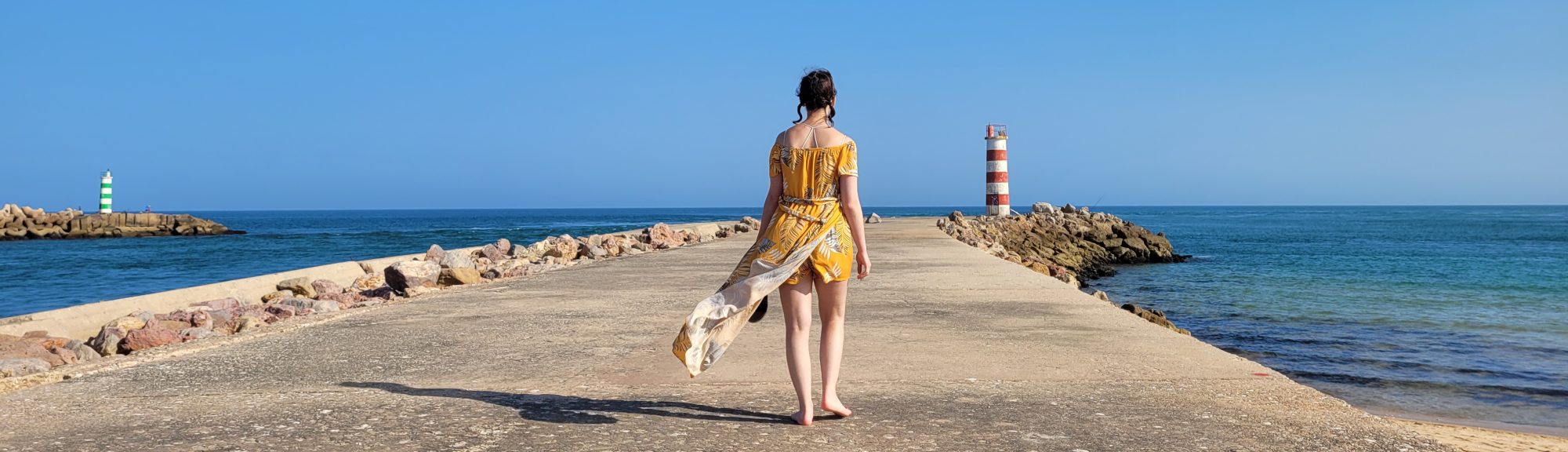

The KwaZulu-Natal Interior
Our time galivanting by the Ocean had come to an end. Now it was time to continue our quest up the Drakensberg mountains, and further into the hermit Kingdom of Lesotho. But first, our journey would take us deeper into the jungle, to the picturesque Oribi Gorge.
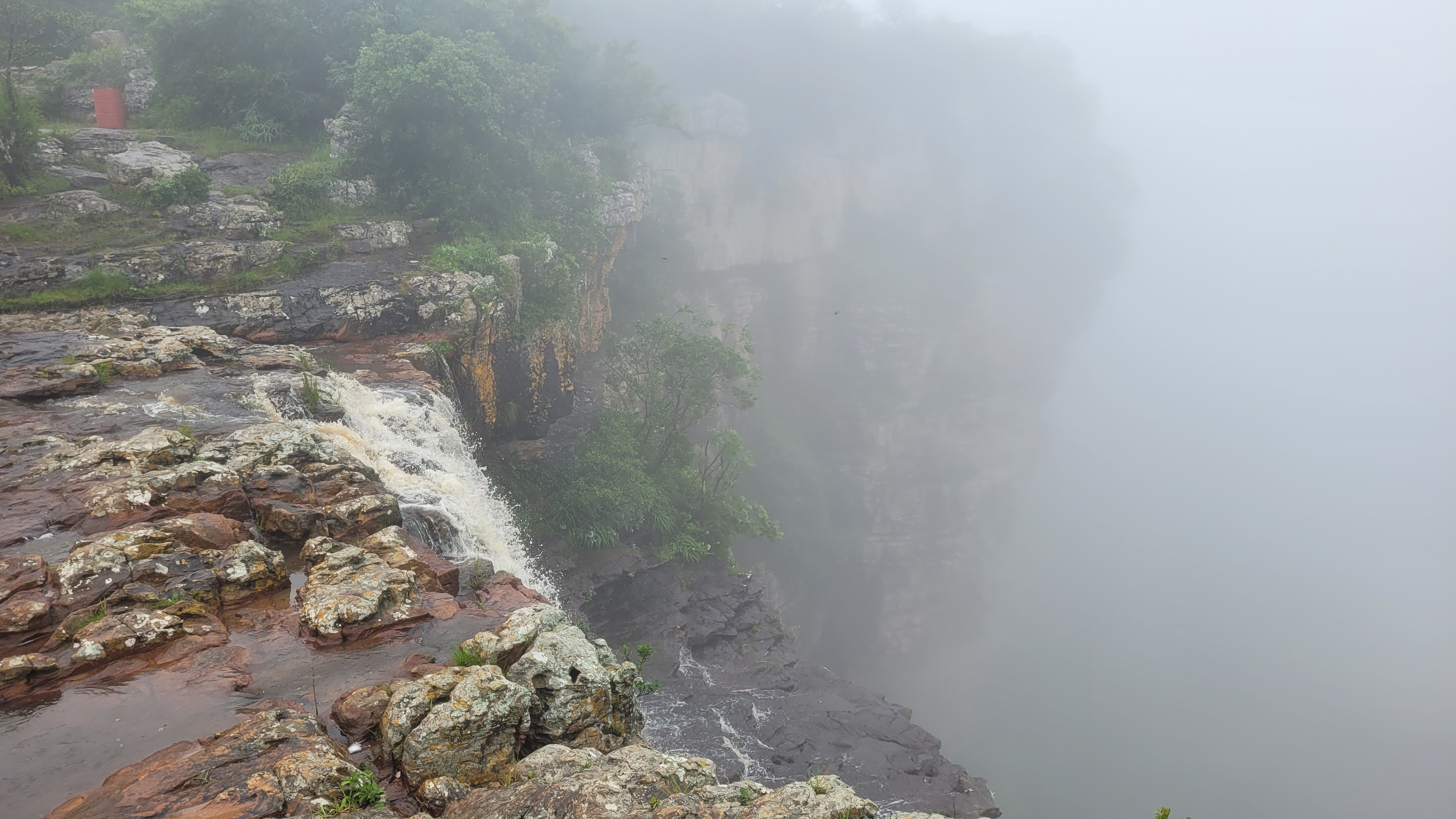
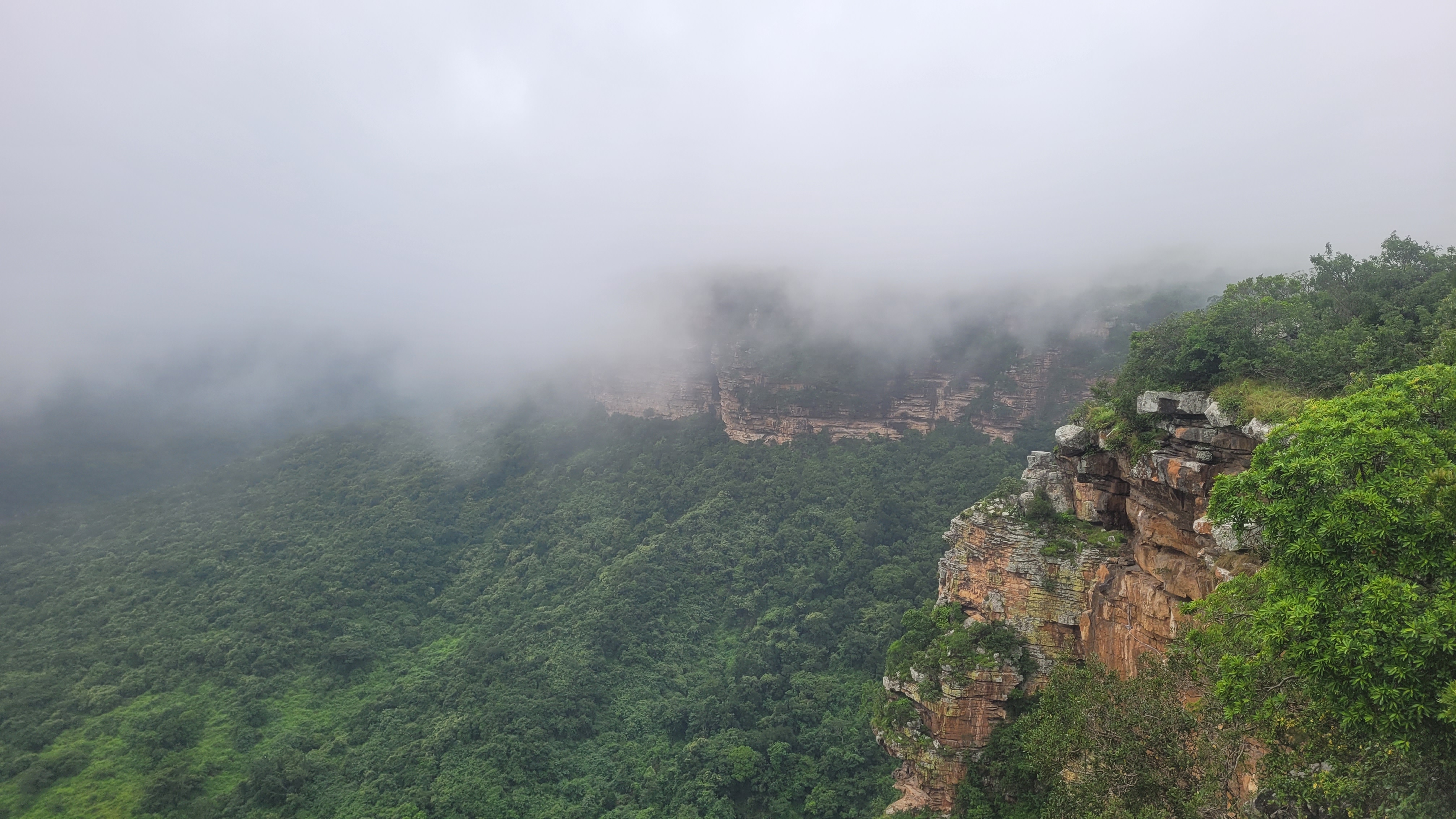
Unfortunately, the weather was not on our side, and the views, which I’m sure are spectacular, were engulfed in dense mist. However, this had a charm of it’s own, and the sparse glimpses of distant cliffs and unfettered falls created an air of mystery and discovery.
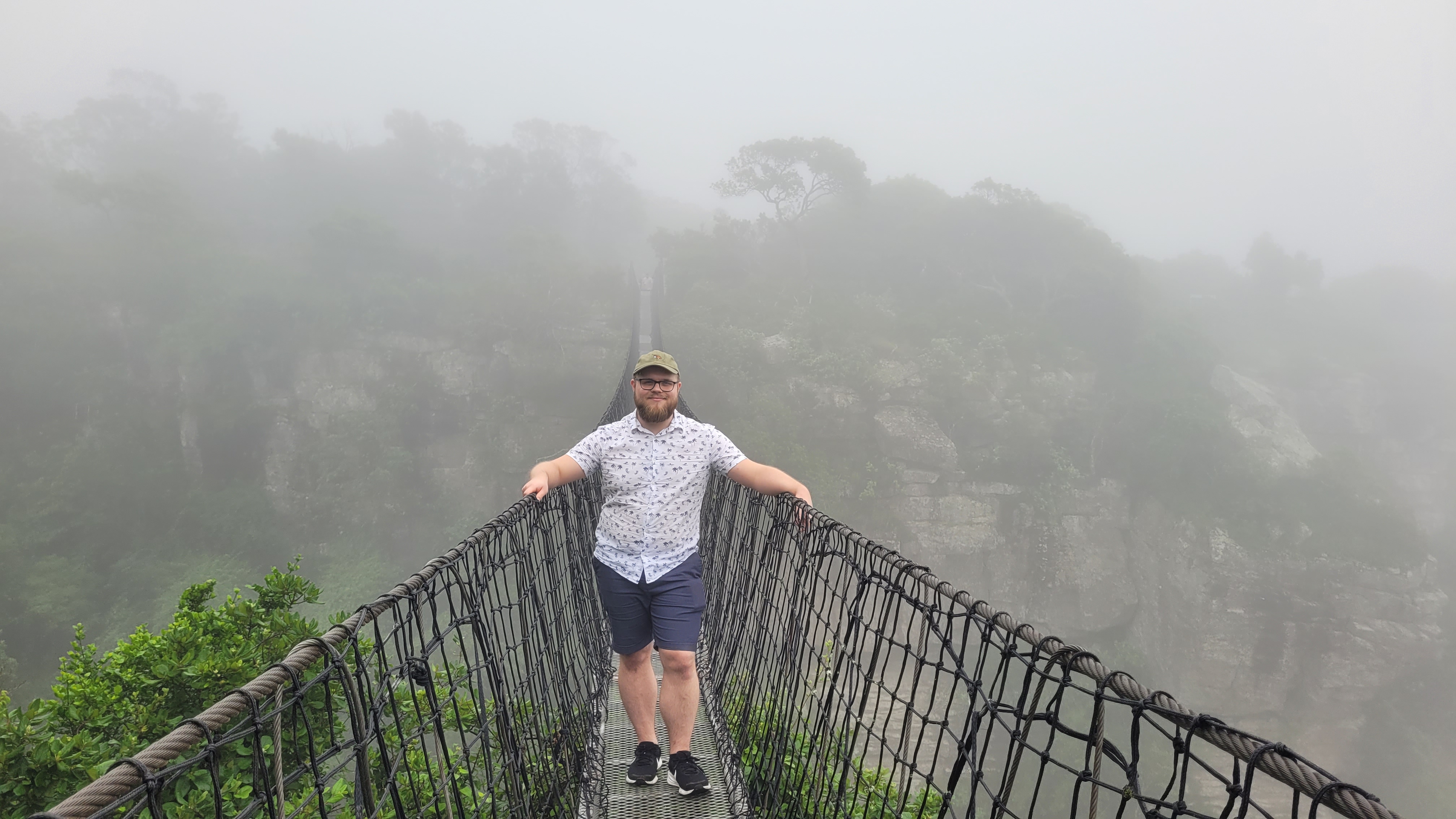
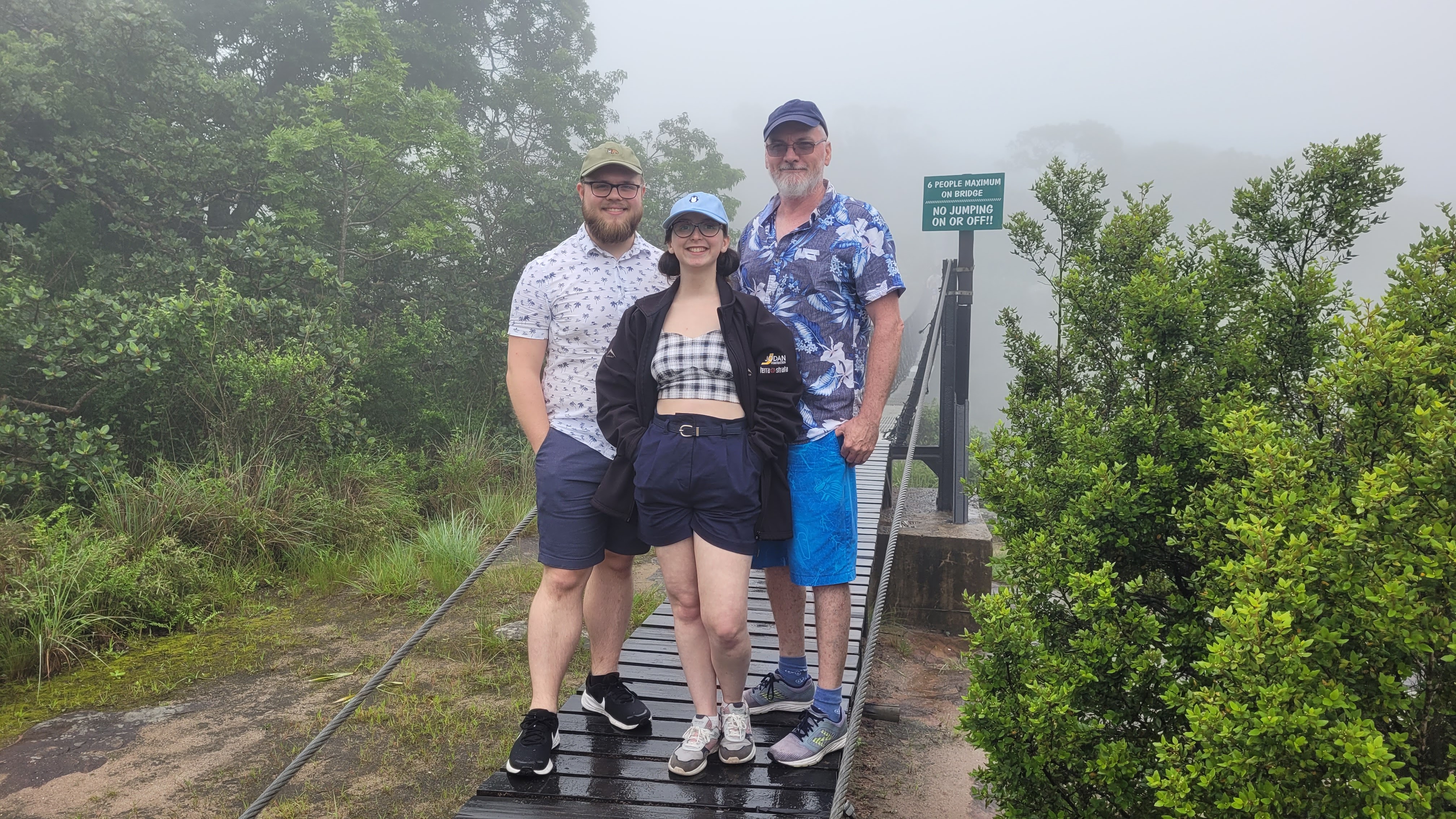
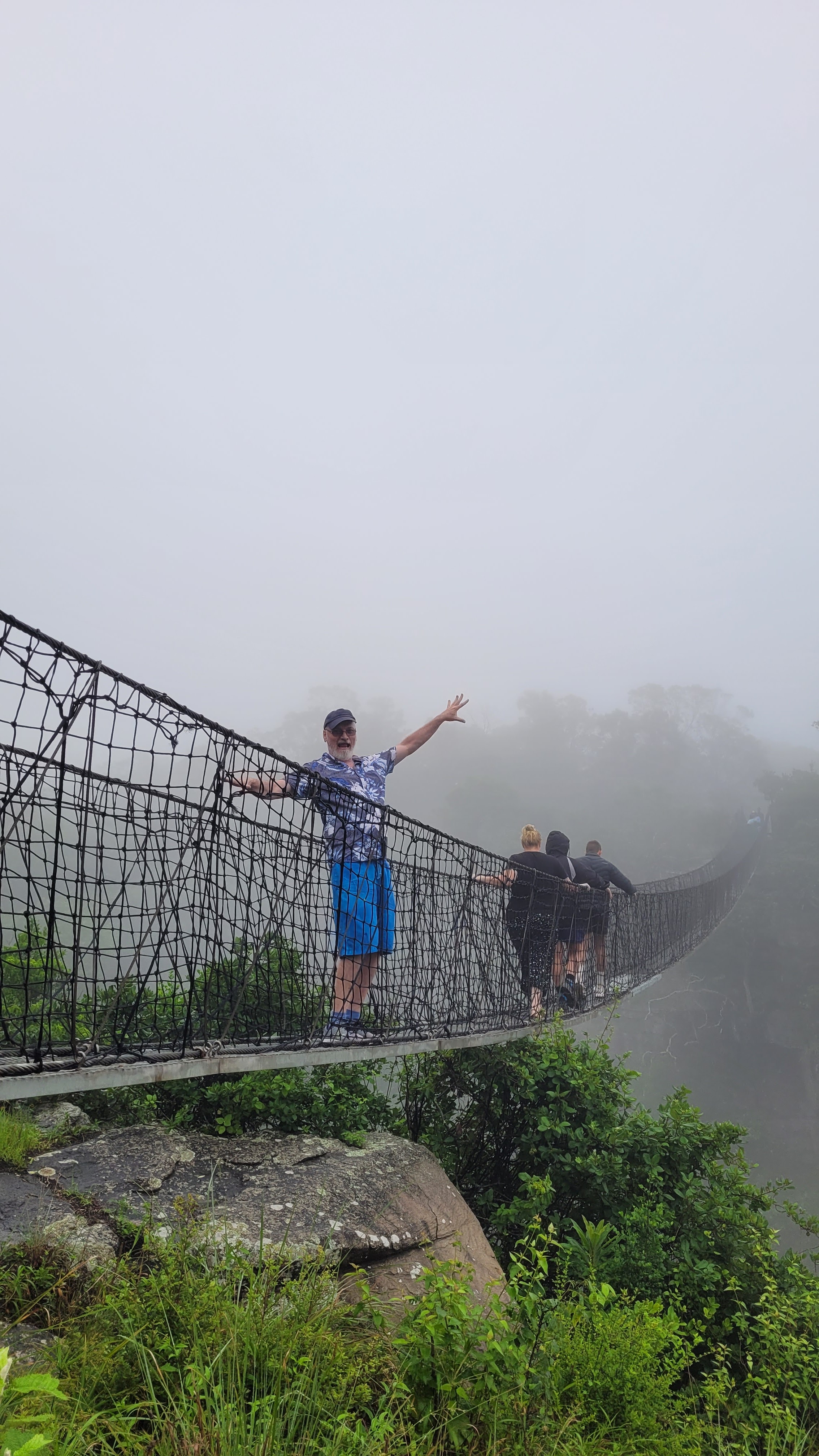
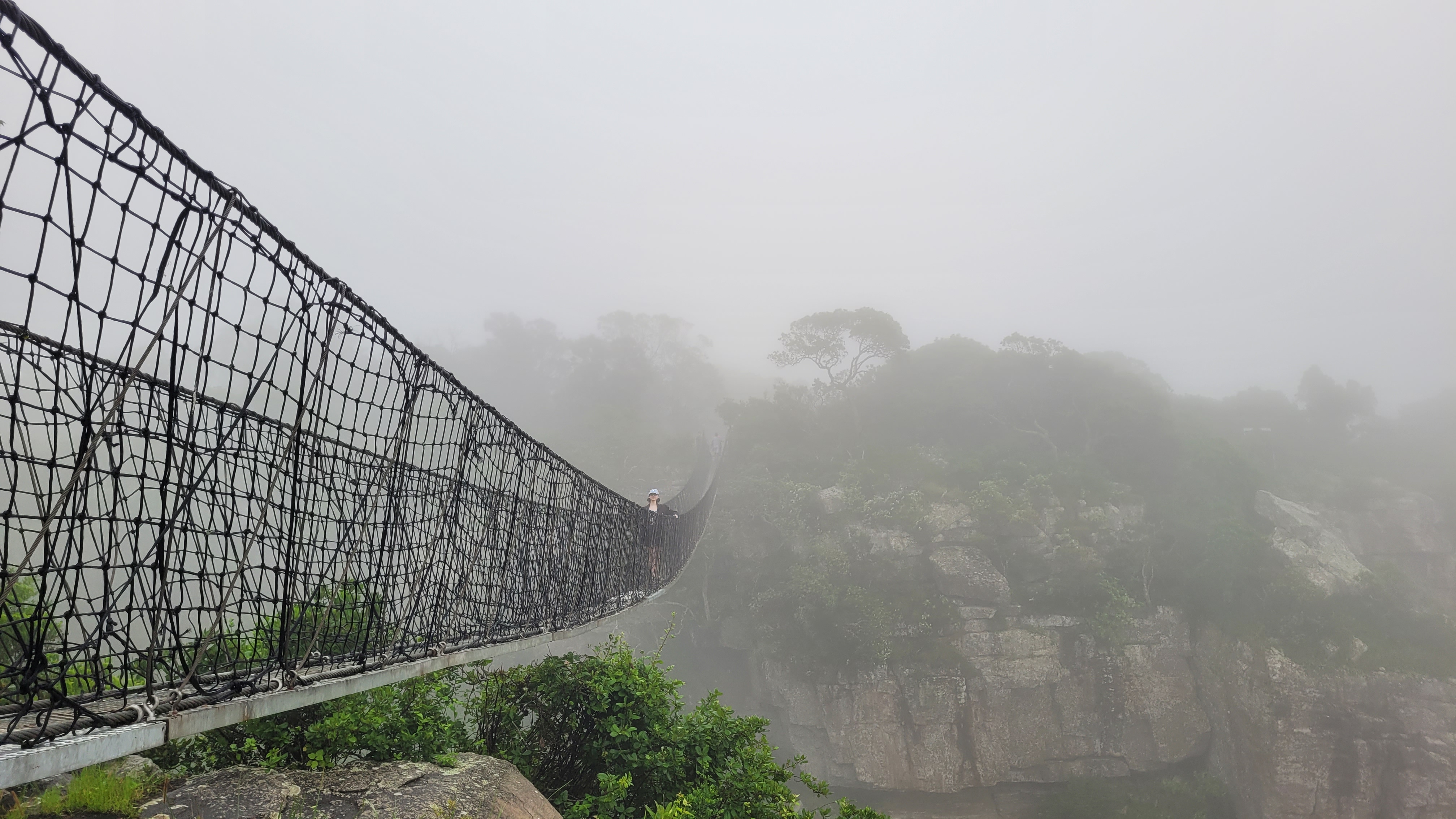
We drove around the Gorge, stopping in the most important spots. The first, and most iconic of them, was the 80m long suspension bridge. Looking down was a mistake, as the 100m drop was heart-stopping. Tayla and David made it across quickly and easily, by I was held back by my fear of heights. Nevertheless, I steeled my nerves, and, looking dead ahead, crossed the bridge. Can’t say it was fun, but I was proud of myself for doing it.
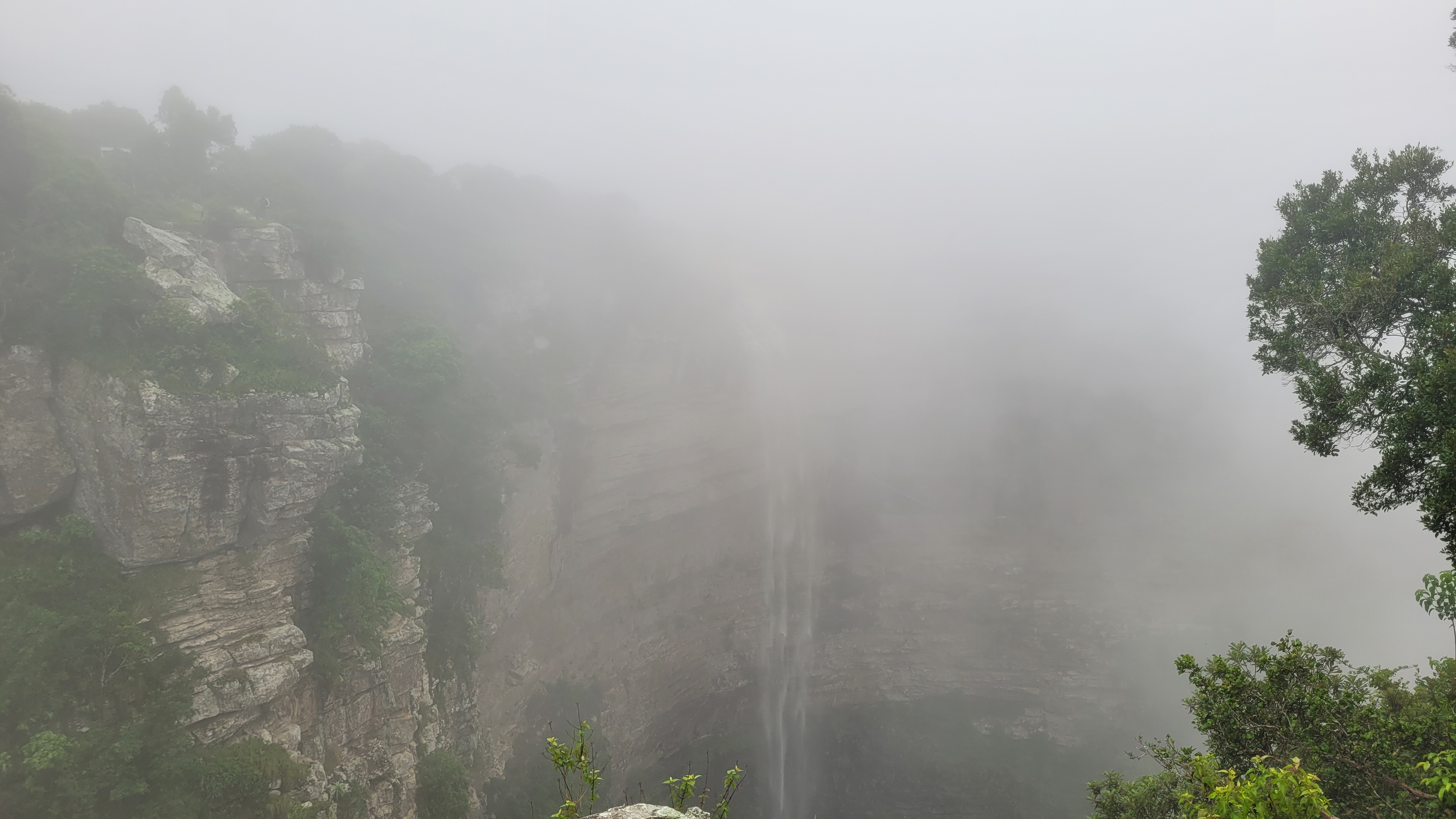
We then wandered around a few viewpoints, but the dense fog obscured what would have been quite amazing views. We had fun trying to spot the waterfall when the wind blew the mist away just a little bit.
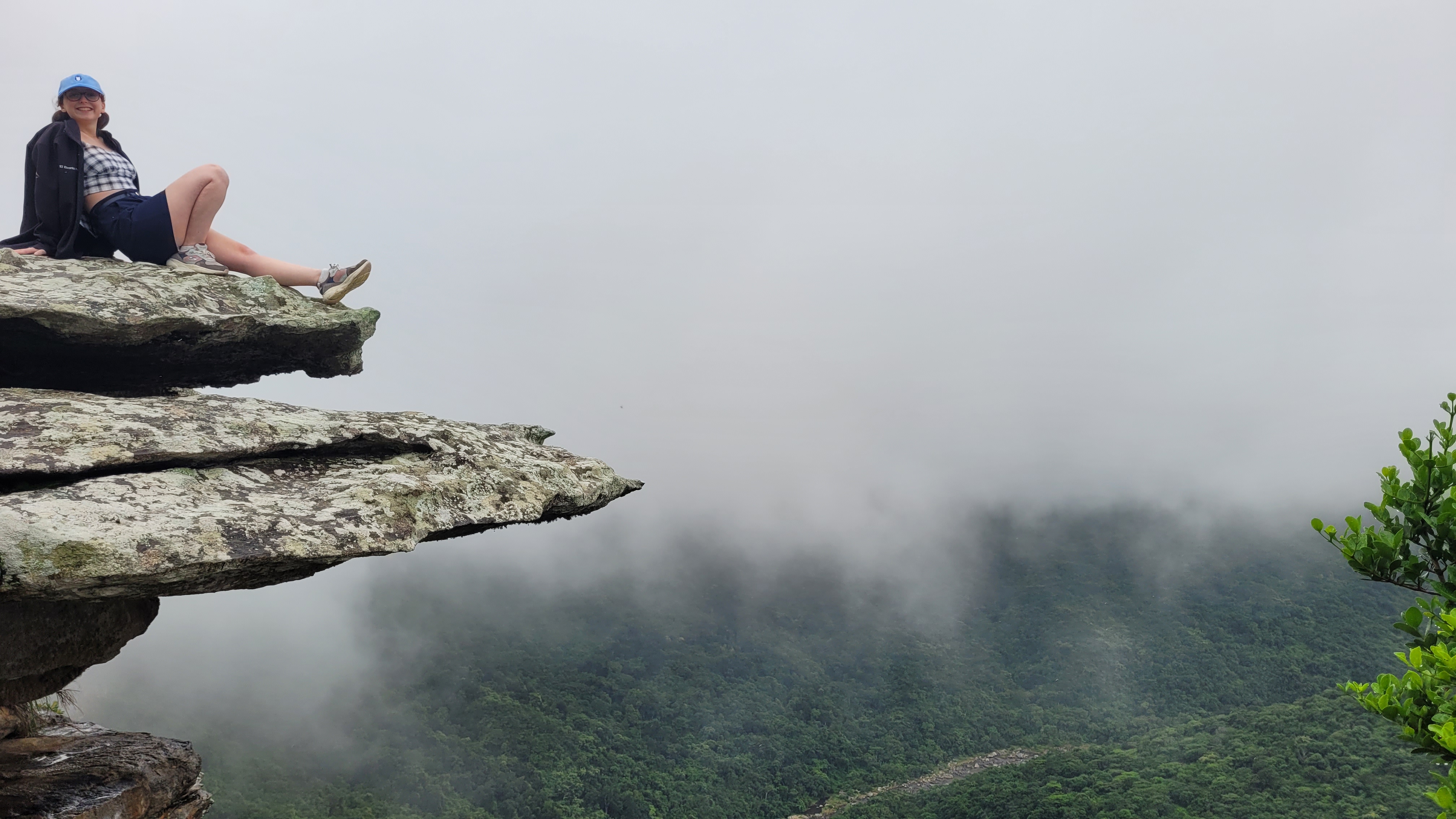
We finished up finding a large overhanging rock, from which we took photos of a young family, and they, in-turn, took some nice photos of us. I imagine, if the mist wasn’t obscuring the drop, the view straight down would have been quite terrifying.
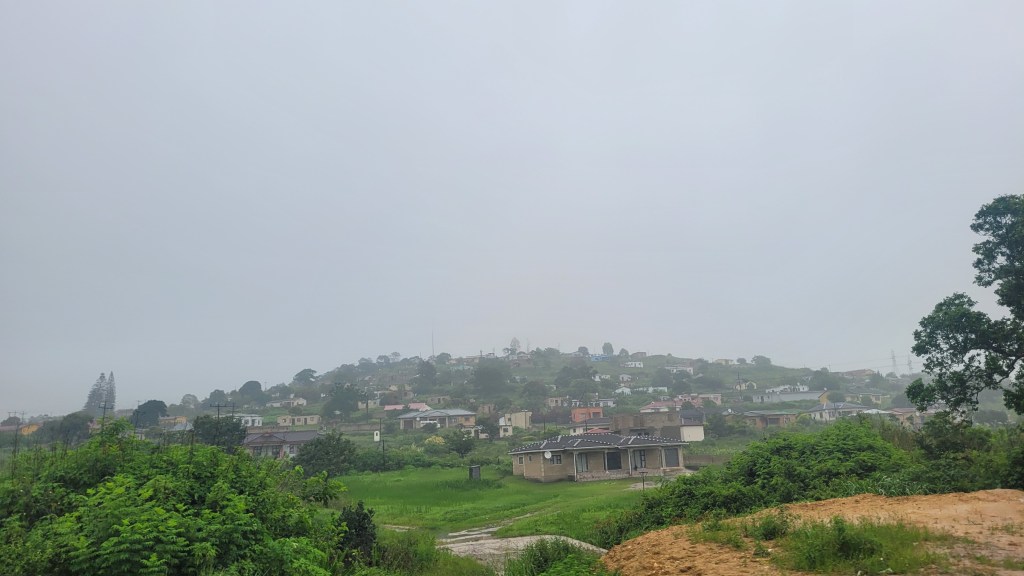
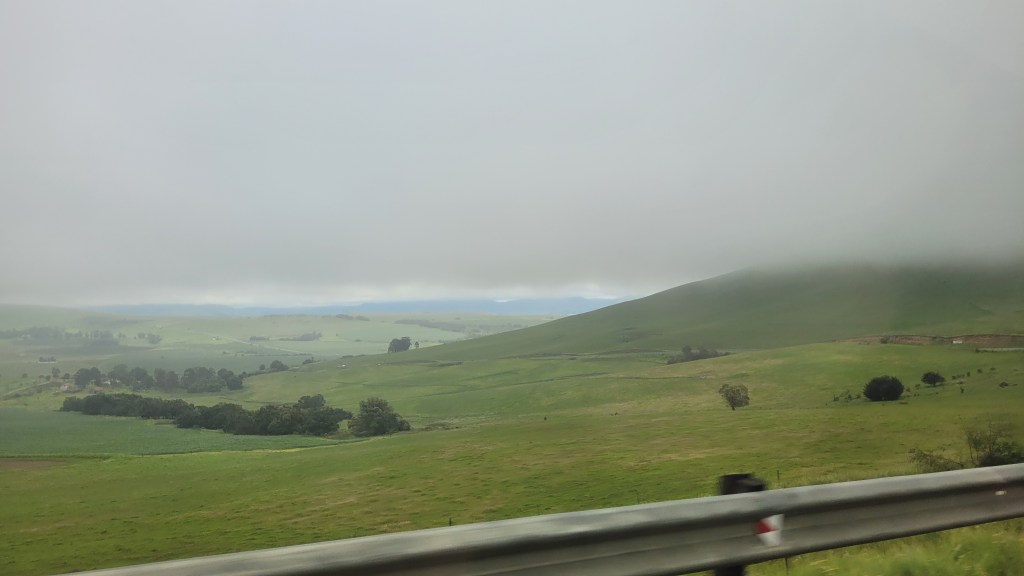
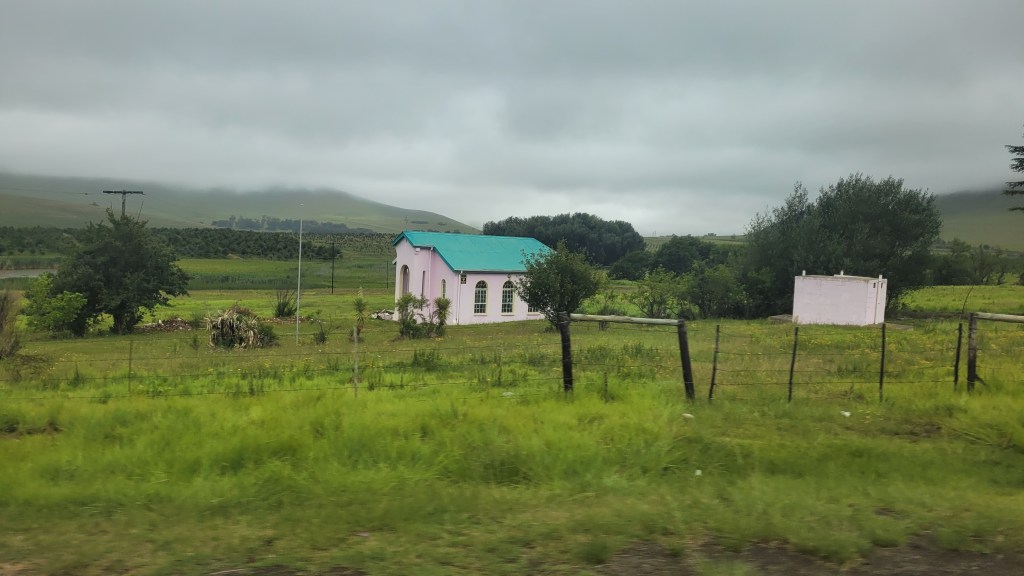
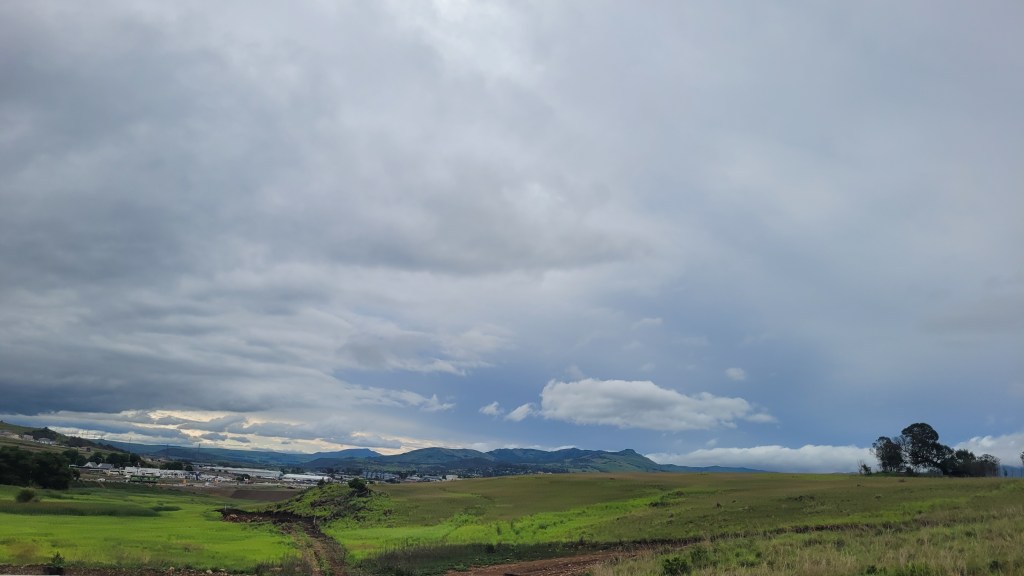
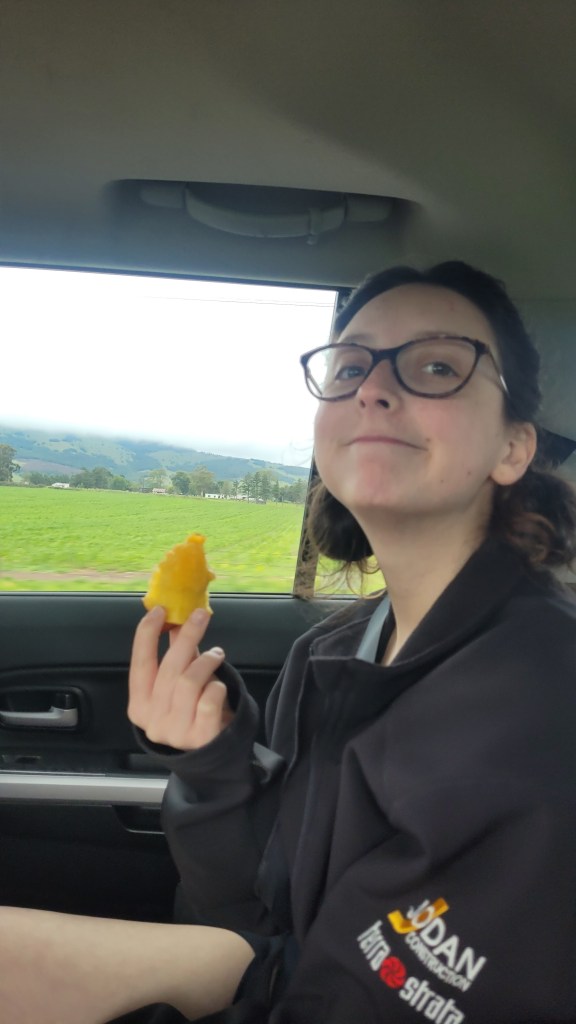
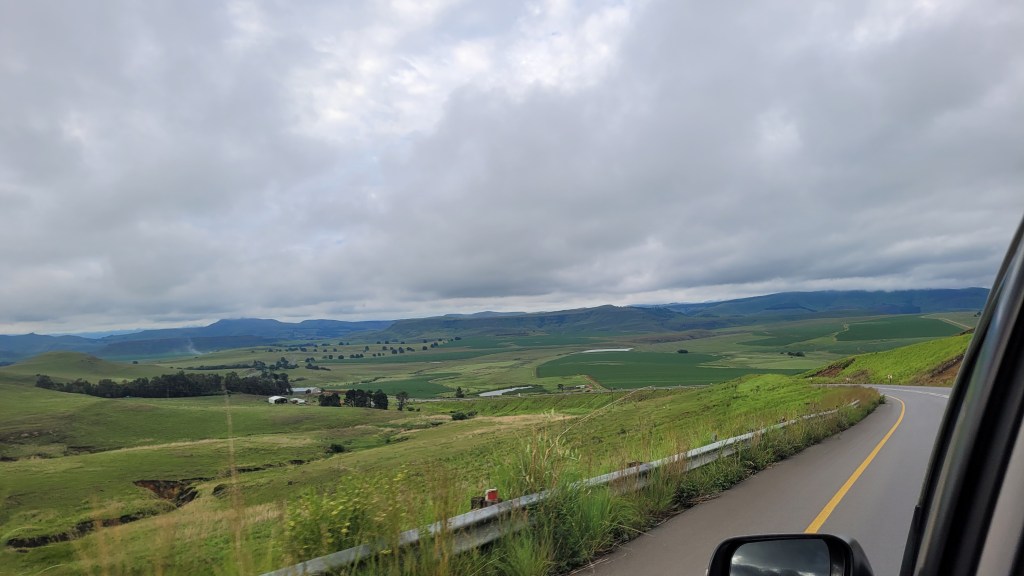
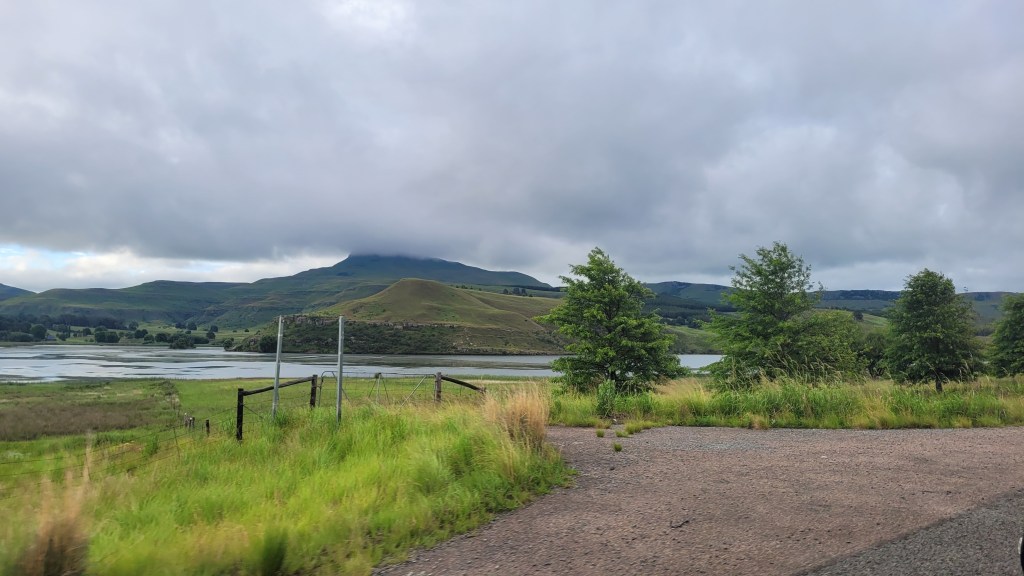
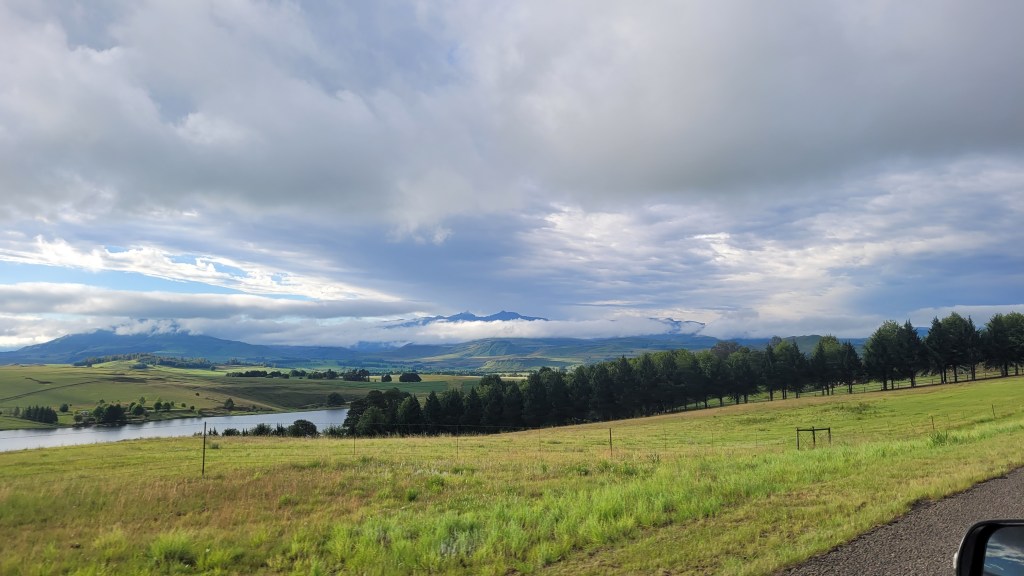
Now we continued the drive towards Himeville, the launching-off point for a drive through Lesotho. The landscape changed massively during this drive. From jungle, to cultivated tree groves, to farmlands, and finally the foothills of the Drakensberg mountains.
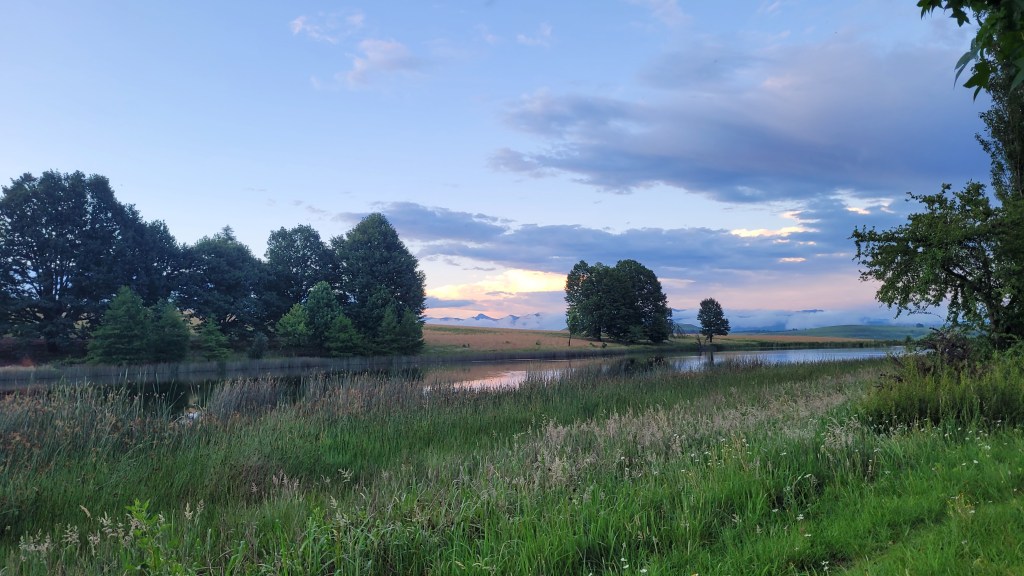
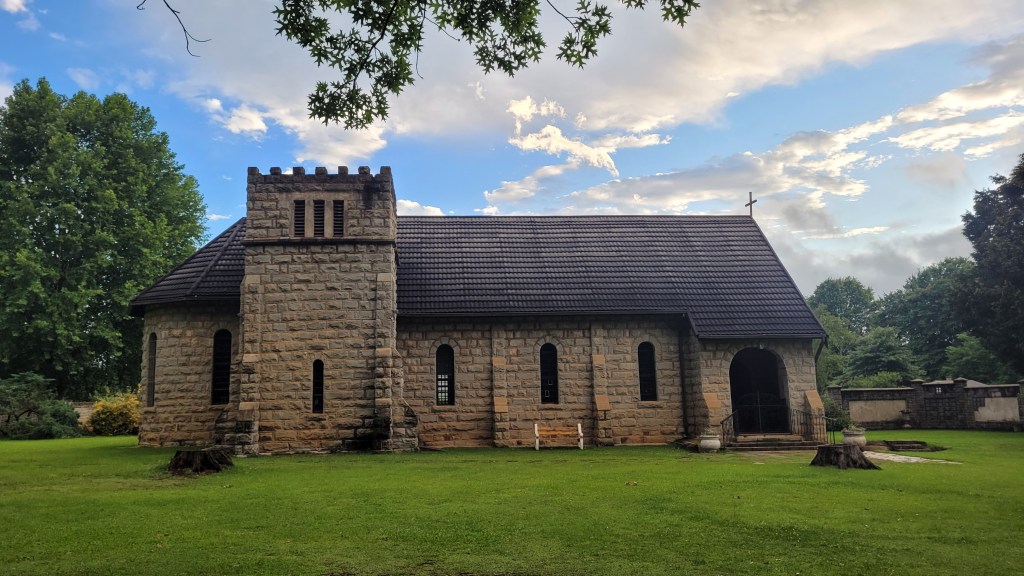
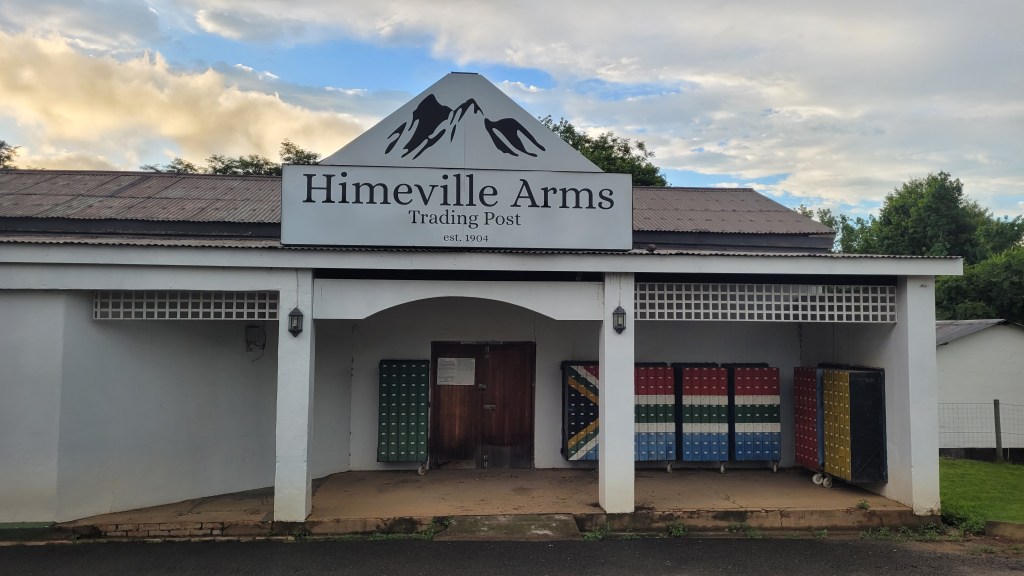
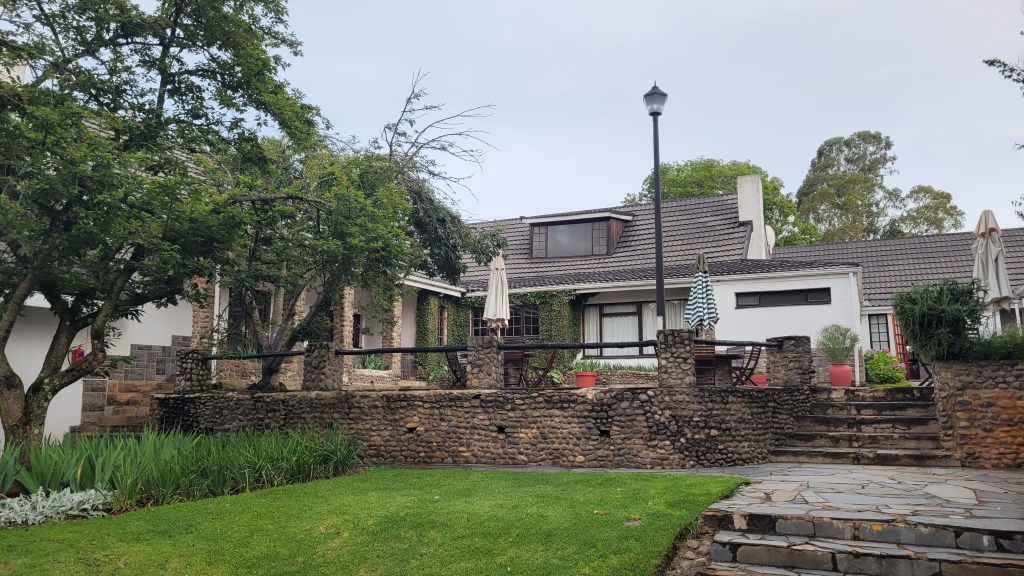
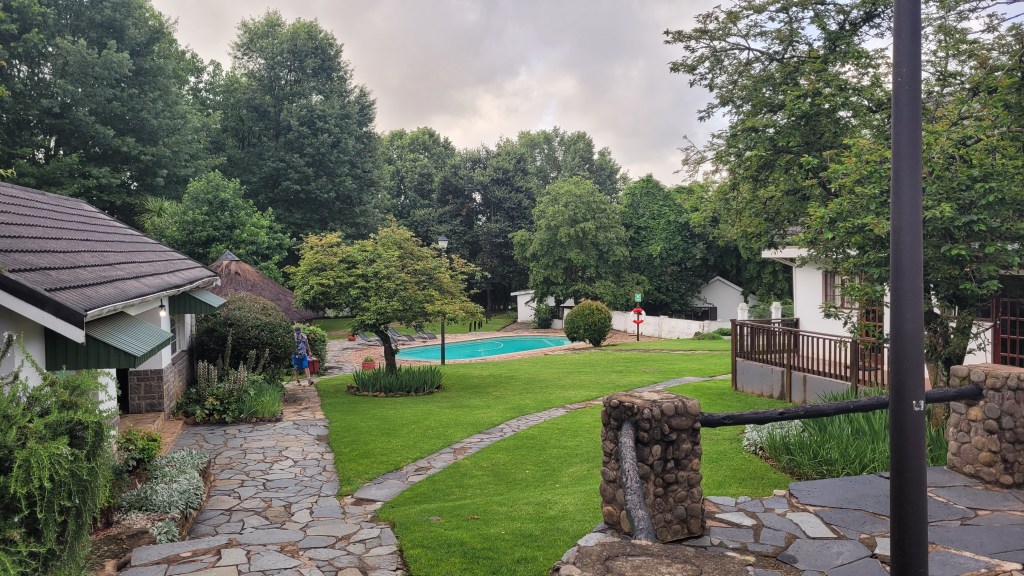
Our day ended with our arrival to the Himeville Arms, a pub/hotel, and the only landmark of the town. Himeville itself is a quiet, quaint little town, with a historical vibe. Modern cars aside, you could almost believe it was still the 19th century here.
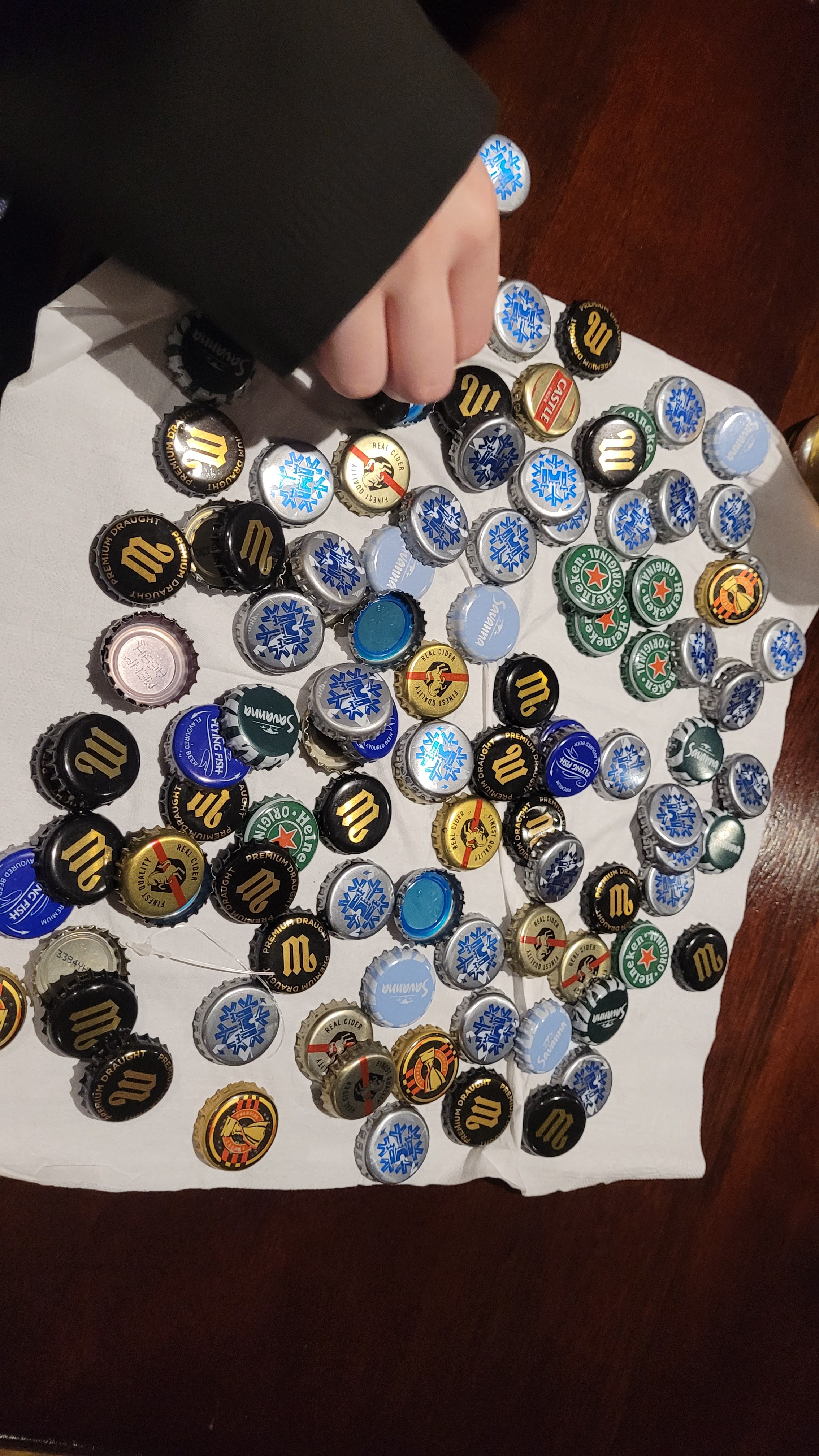
We finished our evening with a meal in the Himeville Arms (there wasn’t anything else open). When I asked the waitress if I could keep the bottlecap from the beer she brought me, she actually came back with a whole bag of different bottlecaps! I picked through them, and grabbed all the unique ones I could find.
Up the Drakensberg
I woke up several times during the night with some discomfort in my stomach. The next day was to be a long one: our plan was to drive through the entire length of Lesotho, and sleep in the South African town of Clarens on the other side. I cursed my poor luck.
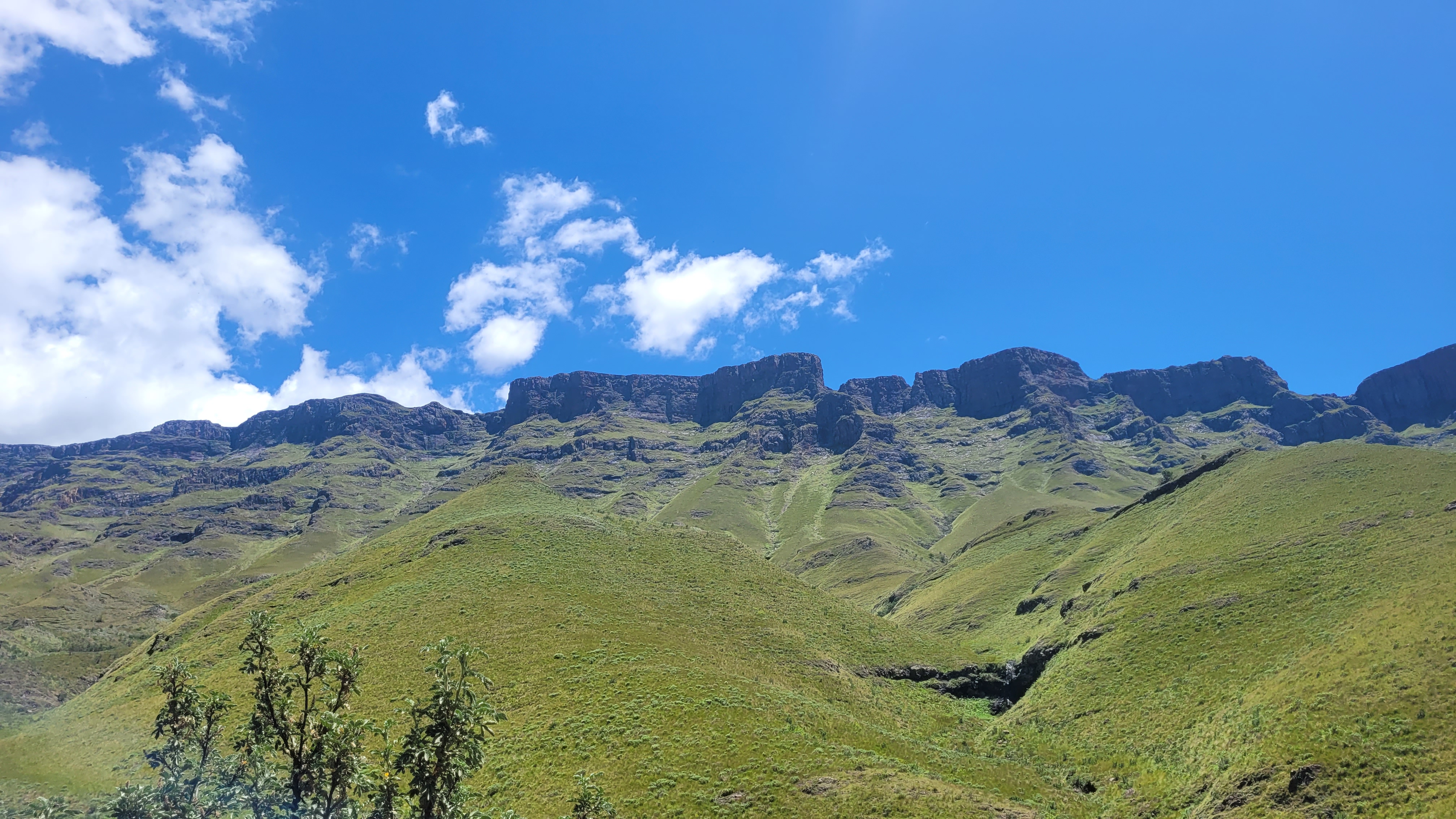
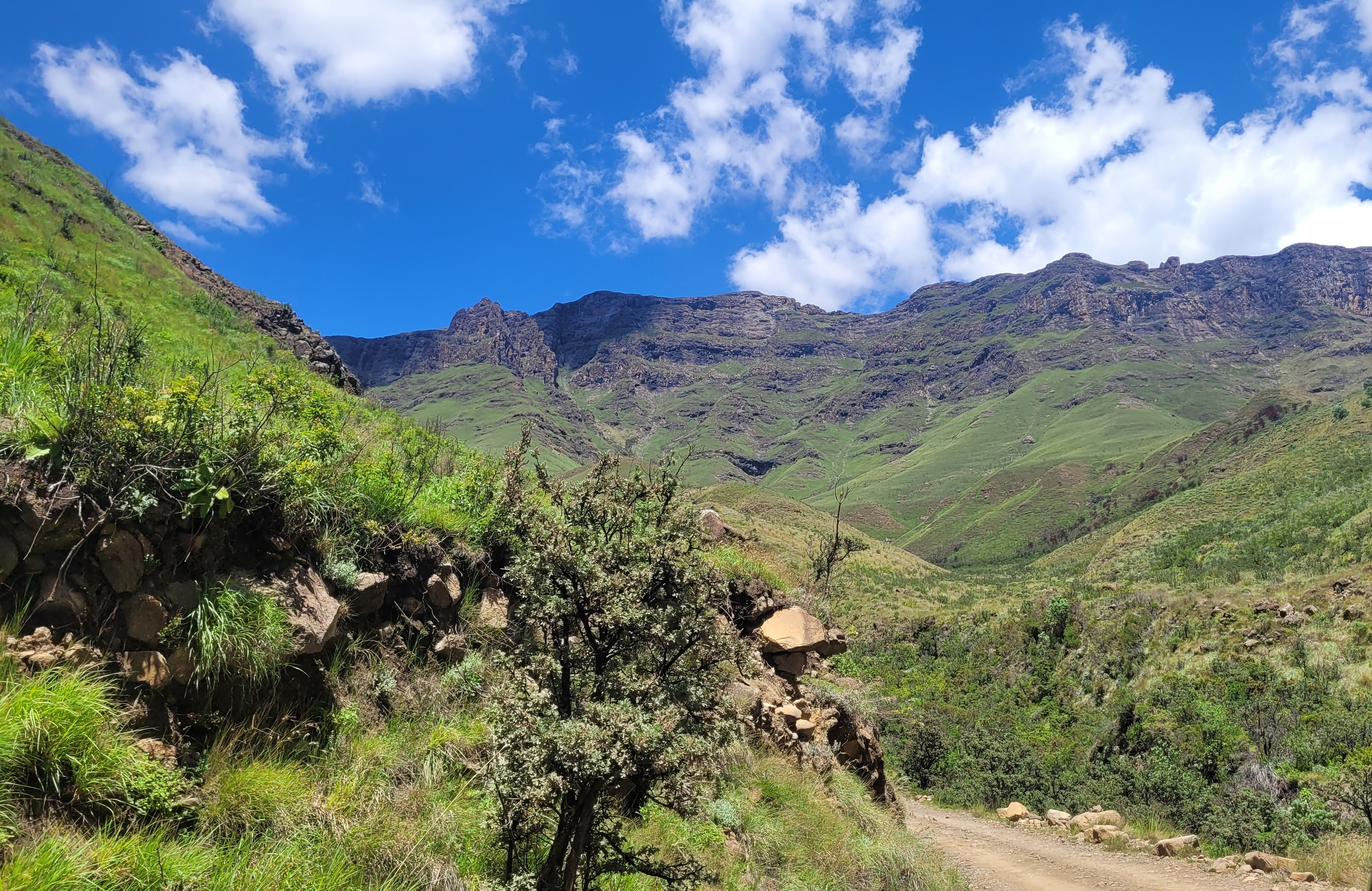
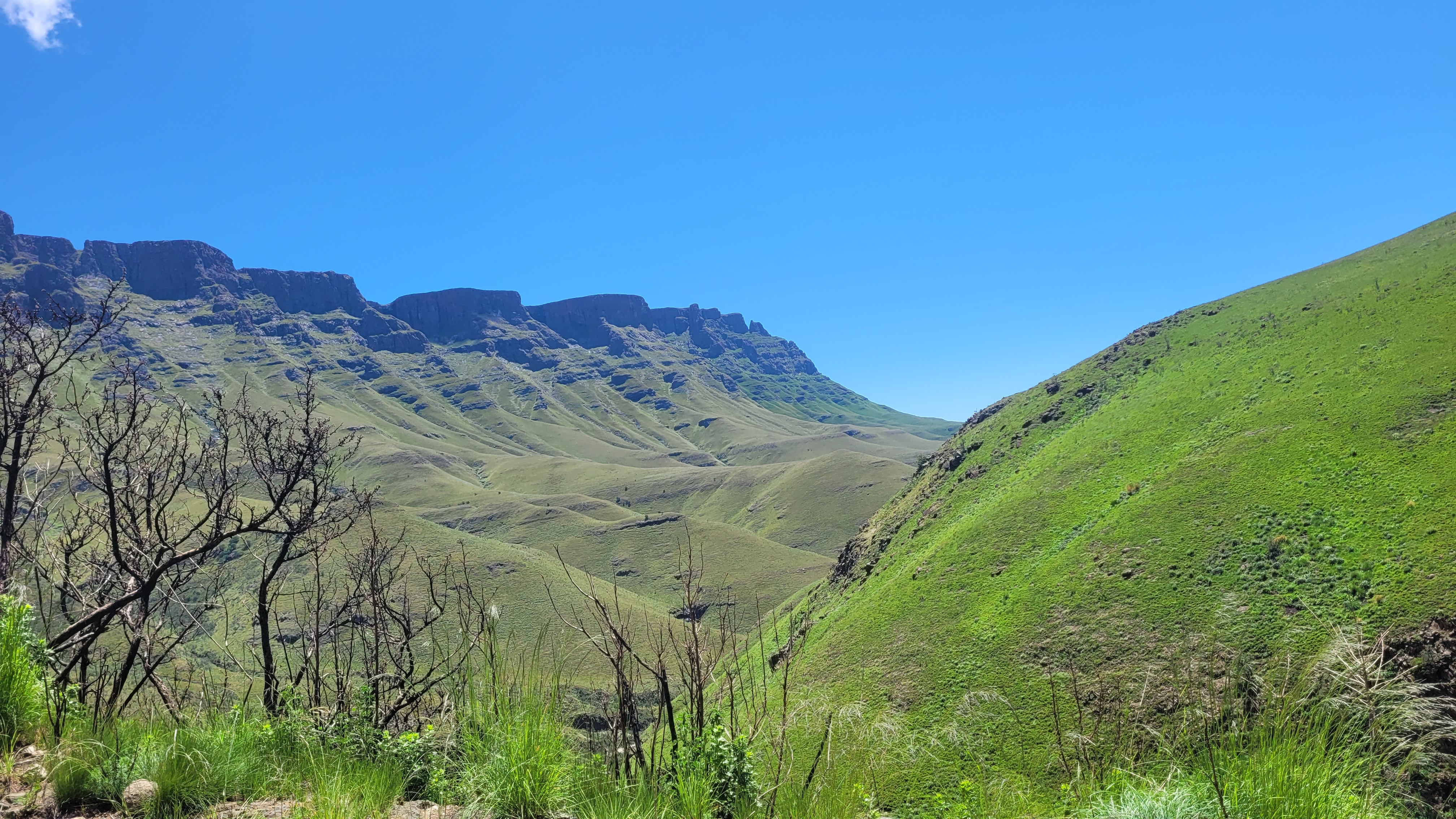
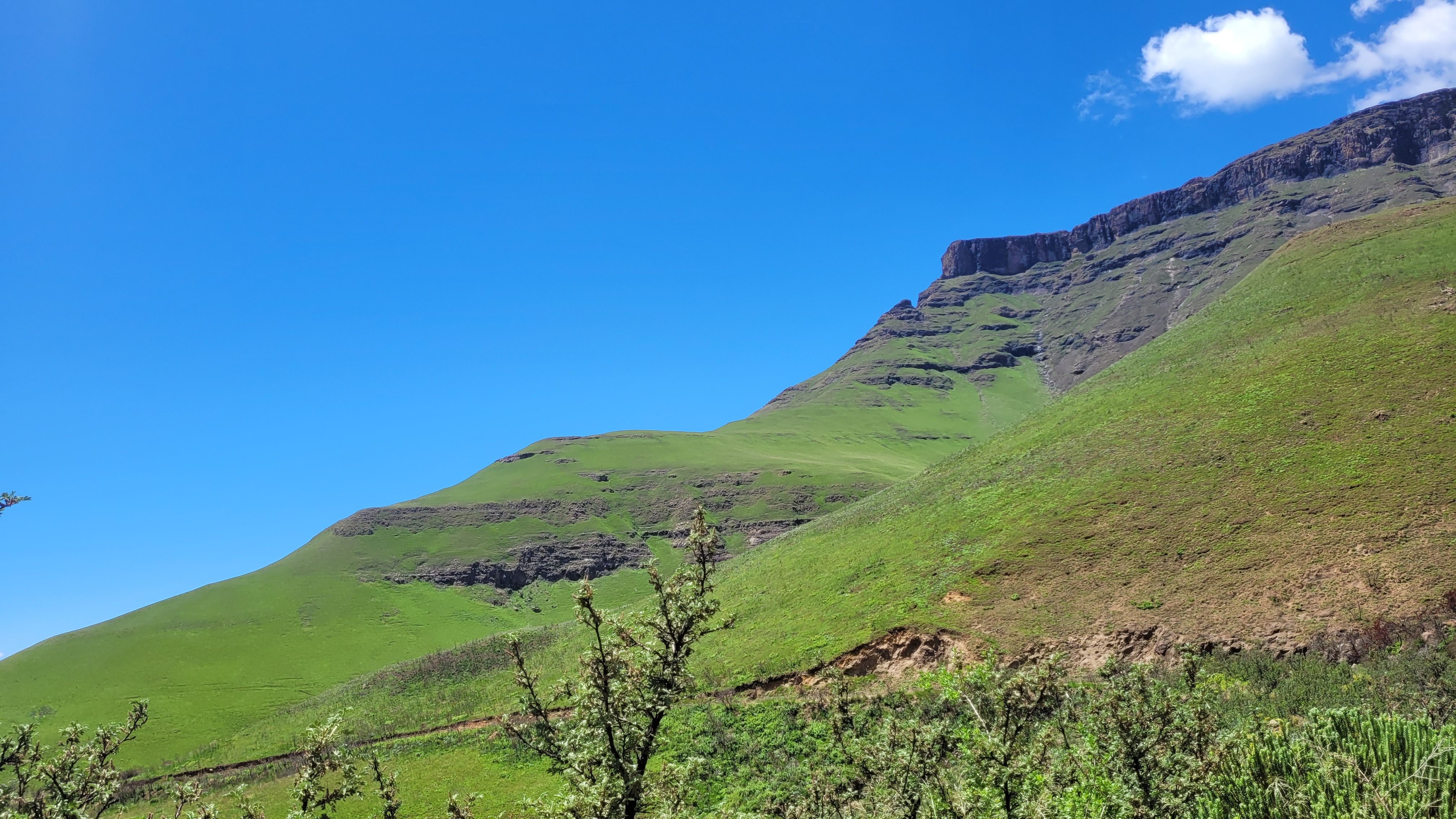
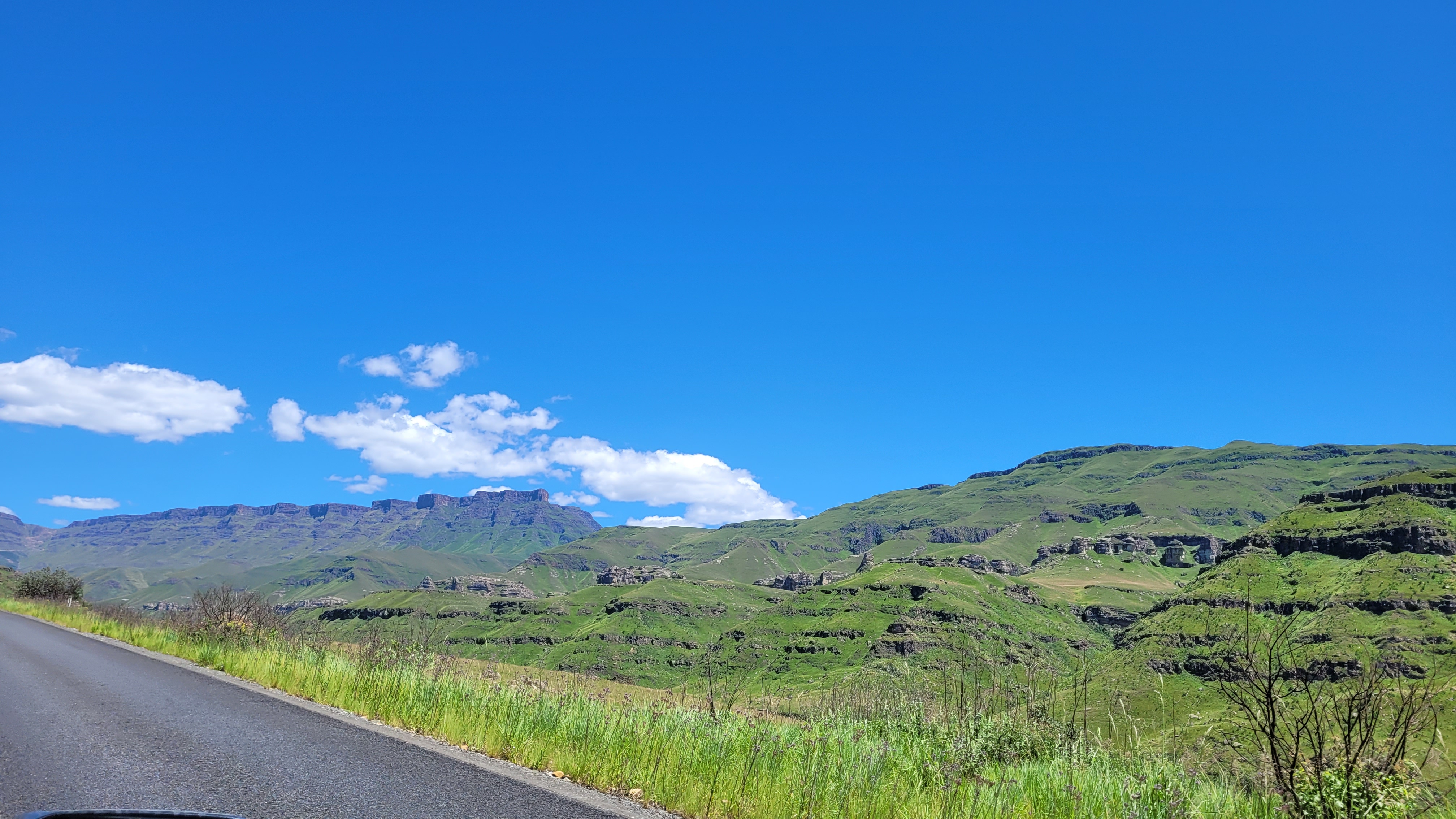
After procuring some medicine, we set out on our journey. It took us about an hour to reach the start of Sani Pass; we watched the foothill slowly grow into the true mountains of the Drakensberg mountain range. Likewise, the nice paved round melted away into a dirt path, that would only degrade in quality until we reached the Lesotho border.
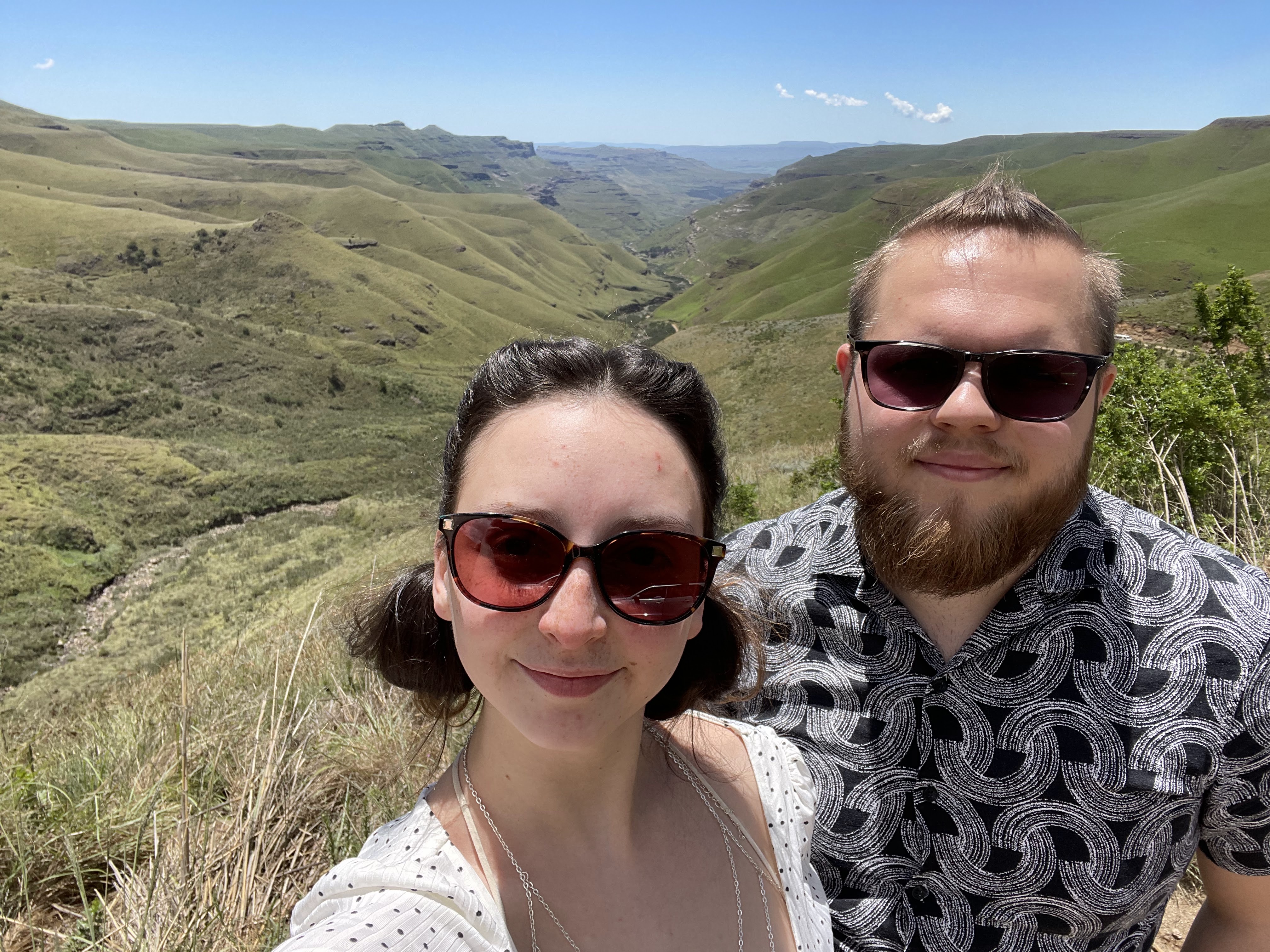
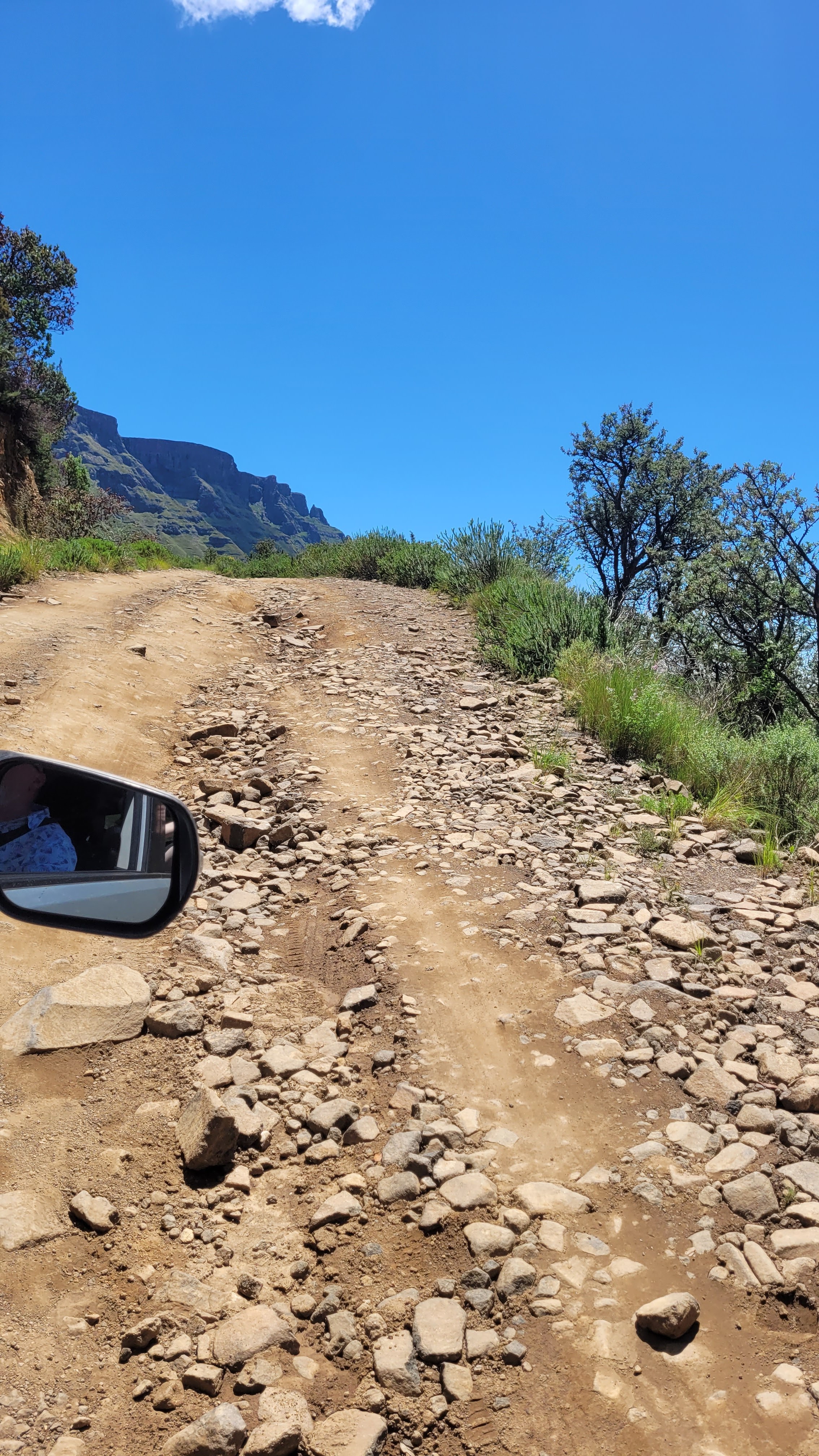
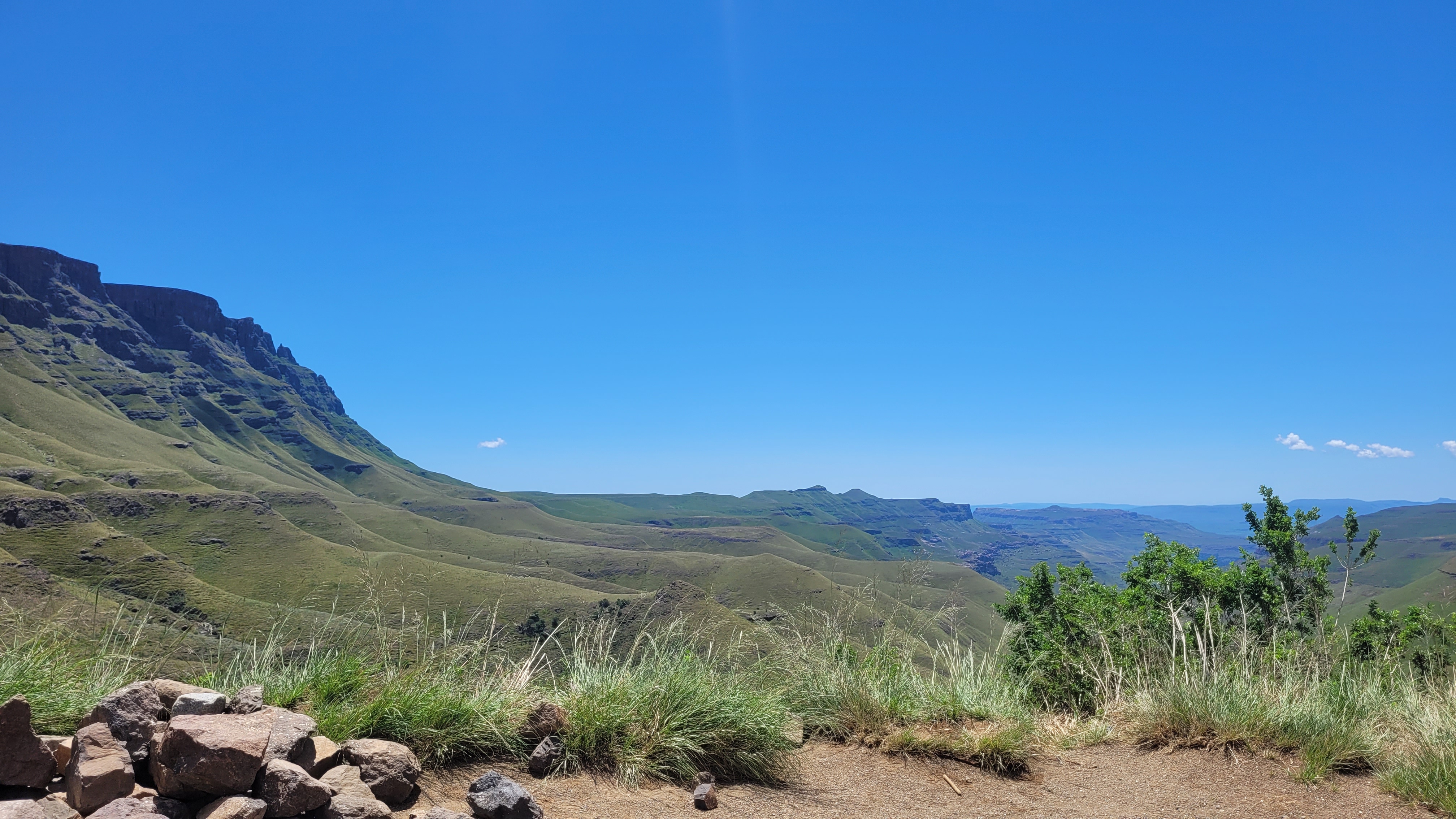
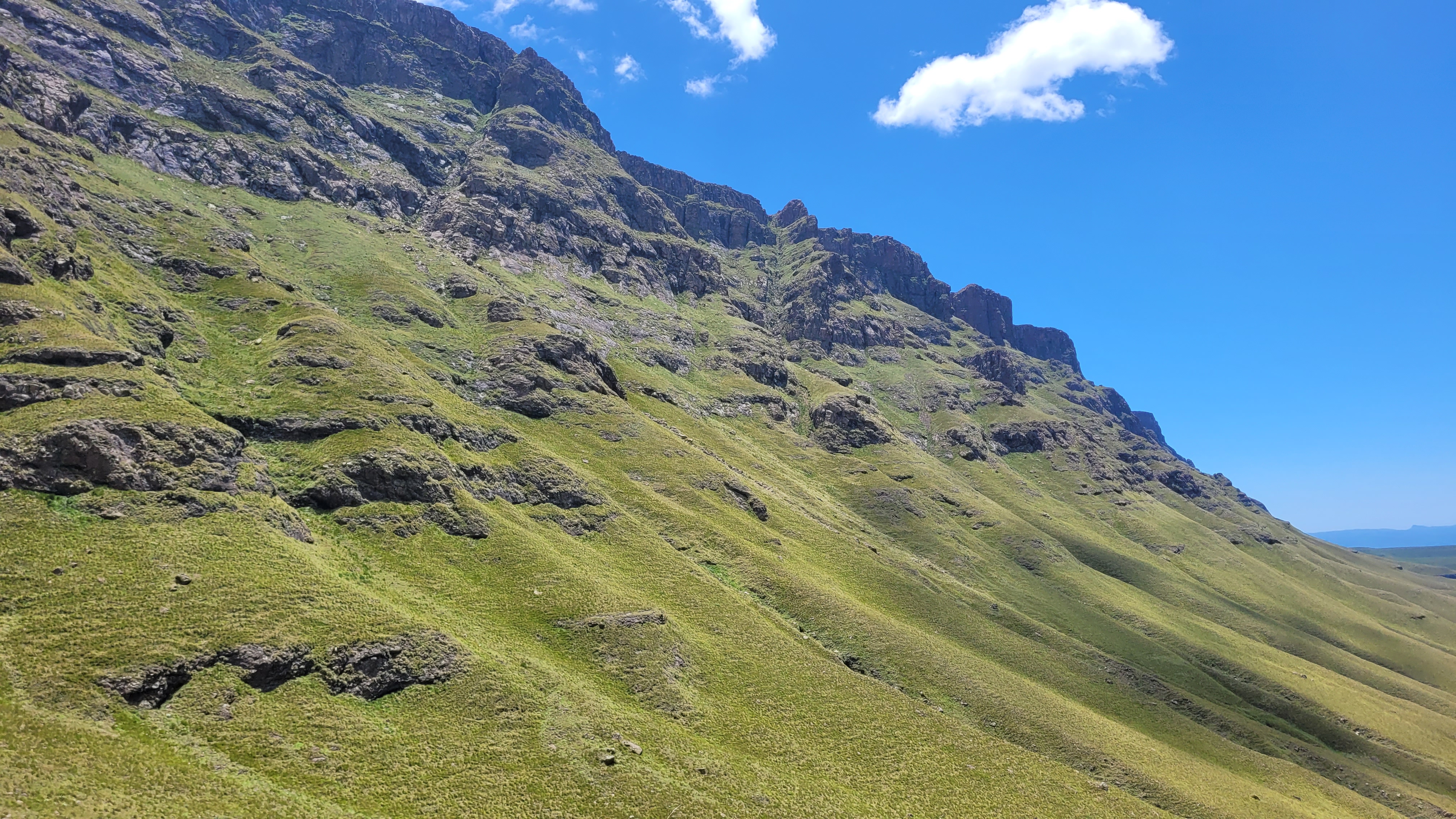
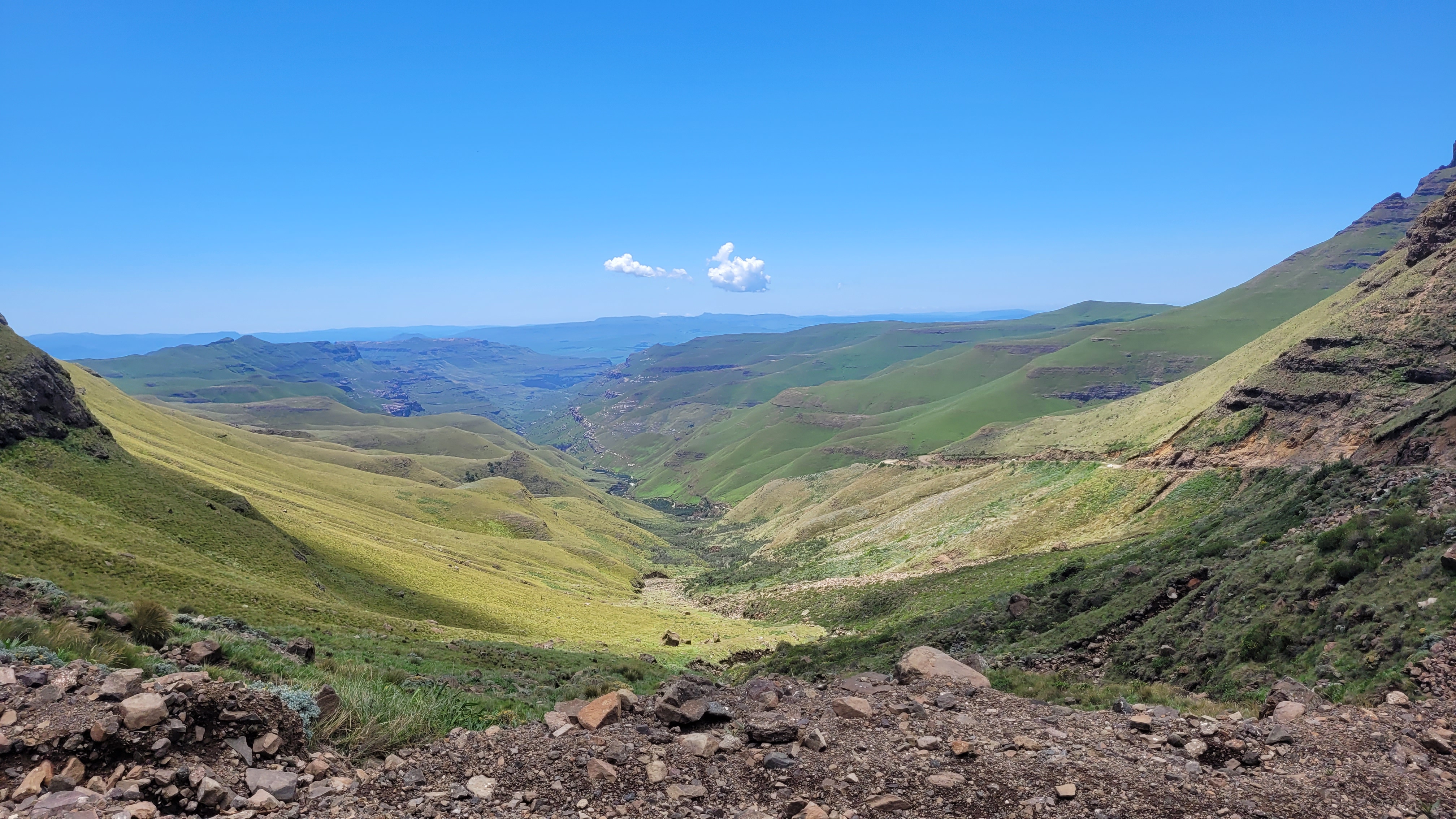
And so our ascent up Sani Pass began. It was fairly smooth at first – some bumps and loose rocks, but the road wasn’t quite so steep yet. The mountains rose around us. Eventually we reached the South African border post, where we were stamped out, and allowed to enter no man’s land.
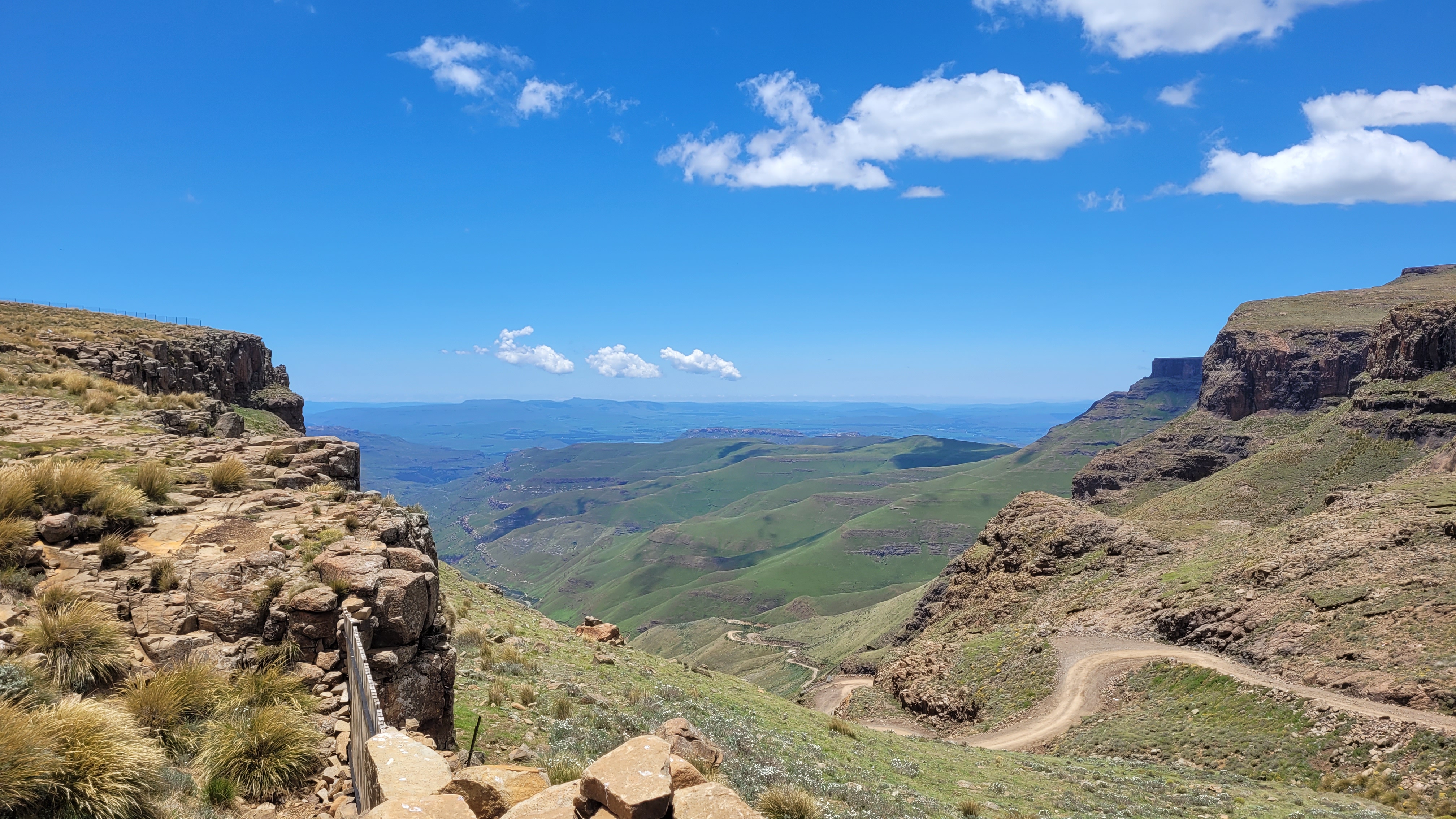
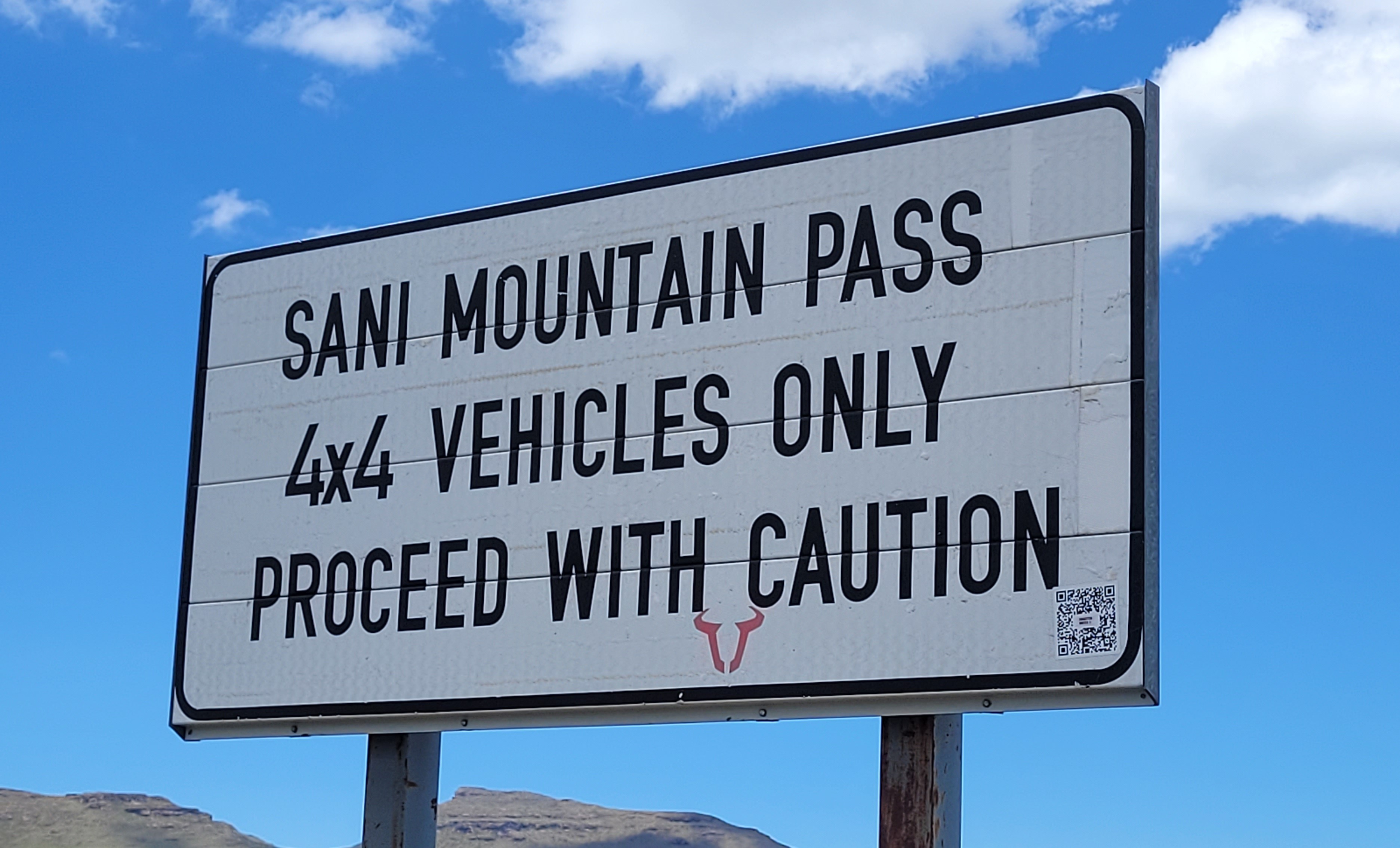
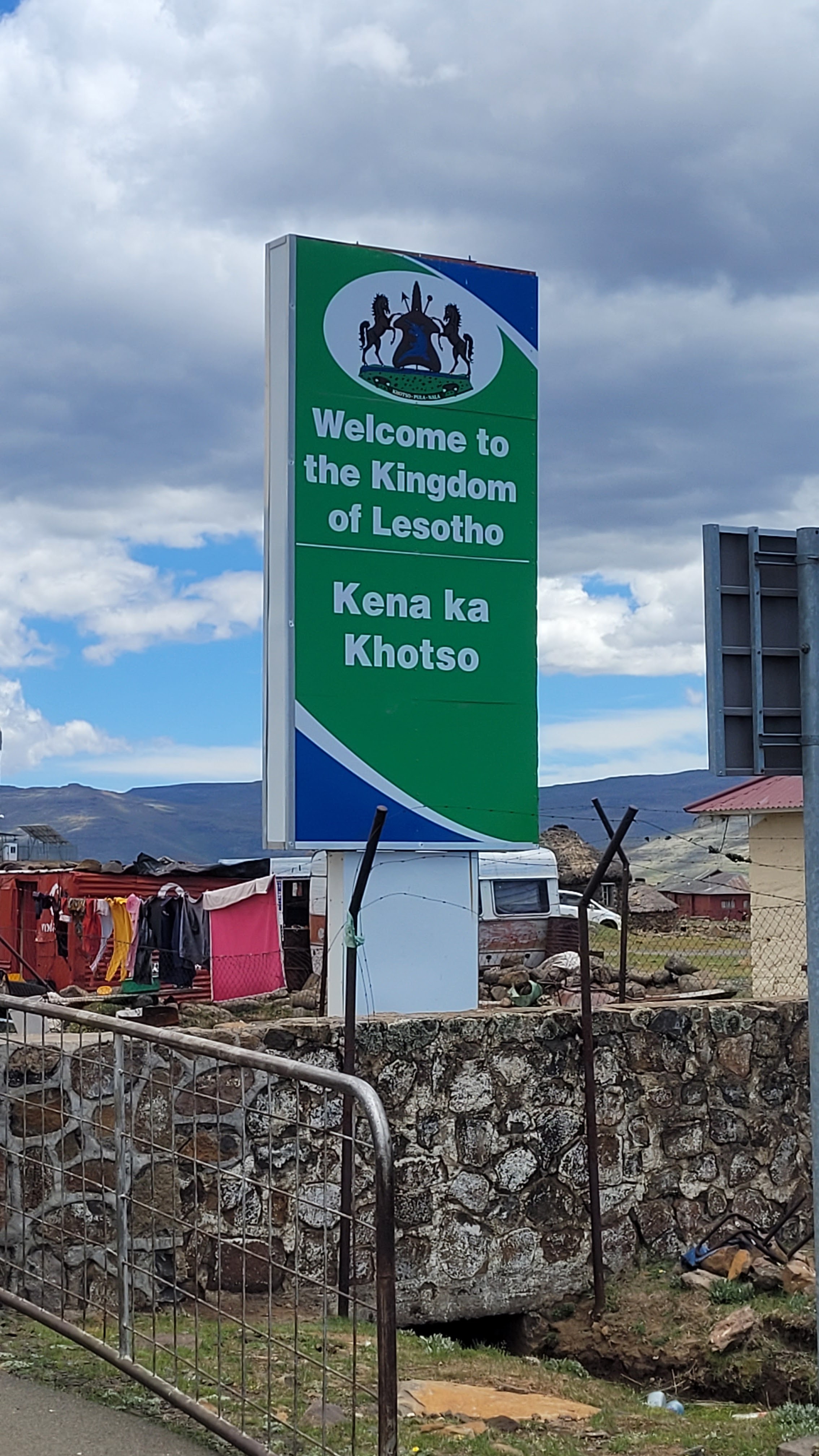
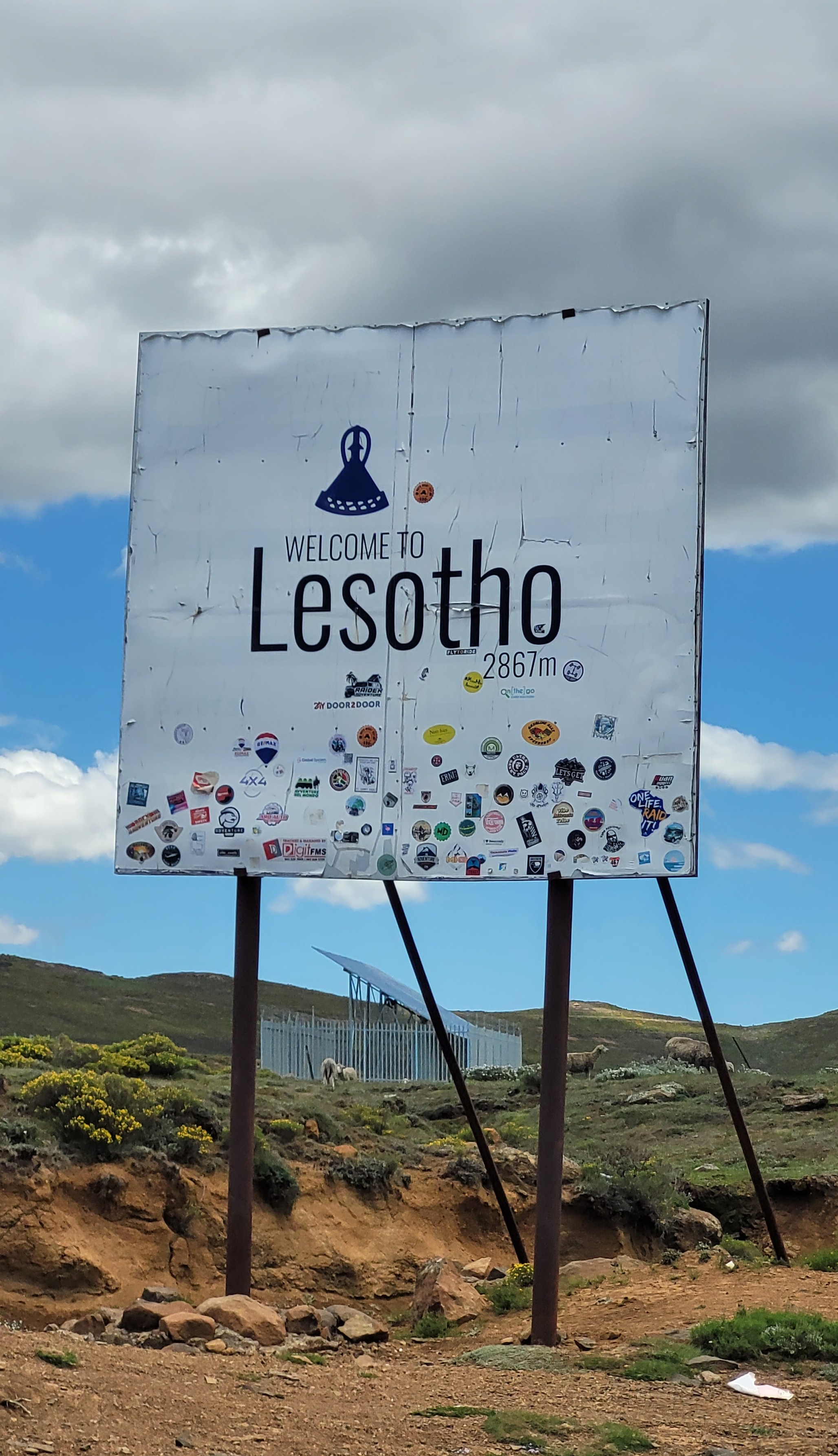
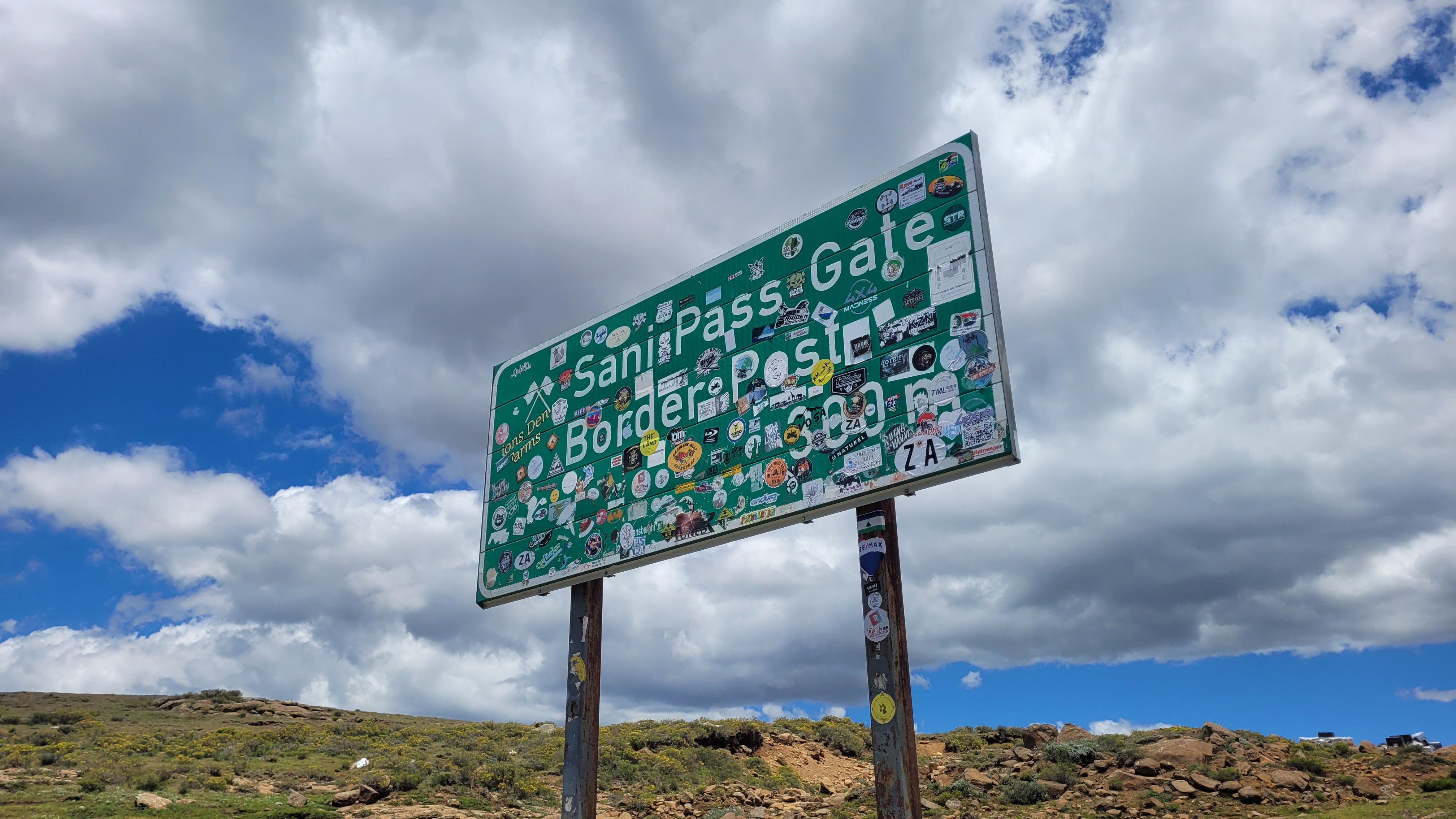
What followed was over an hour’s arduous journey steadily upwards, as our car struggled to climb, and slipping on loose rocks. You can’t do this drive without a 4×4 – anything weaker will end up belly up at the bottom of a gorge. We placed our trust in David’s steady hands and trusty Suzuki Vitara however, and, soon enough, we reached the end: “Welcome to Lesotho, 2867m”. We made it to the Kingdom of the Sky.
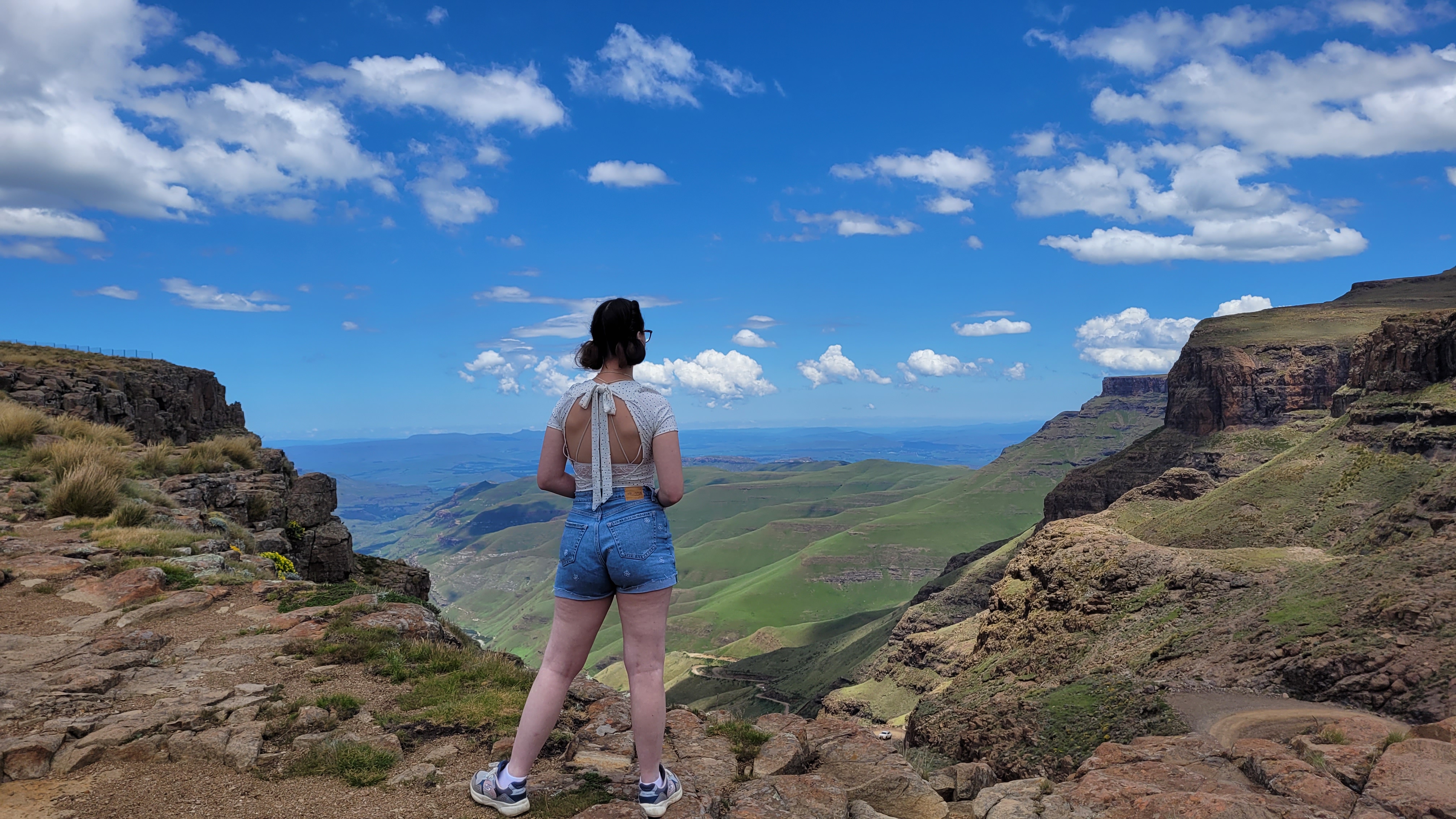
First, we got stamped in and paid the appropriate taxes to enter, and then we were quickly on our way to the Highest Pub in Africa (as it claims). We paid our entrance fee (which we could reclaim in the form of food and drink in the pub), and sat down inside, to get out of the wind.
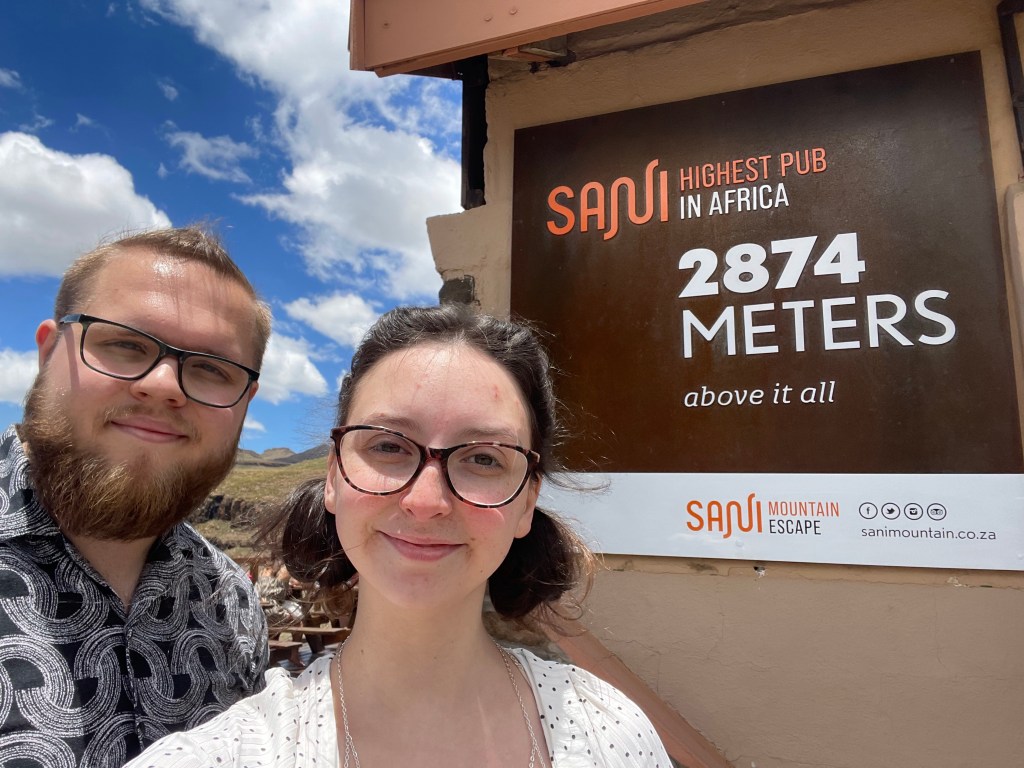
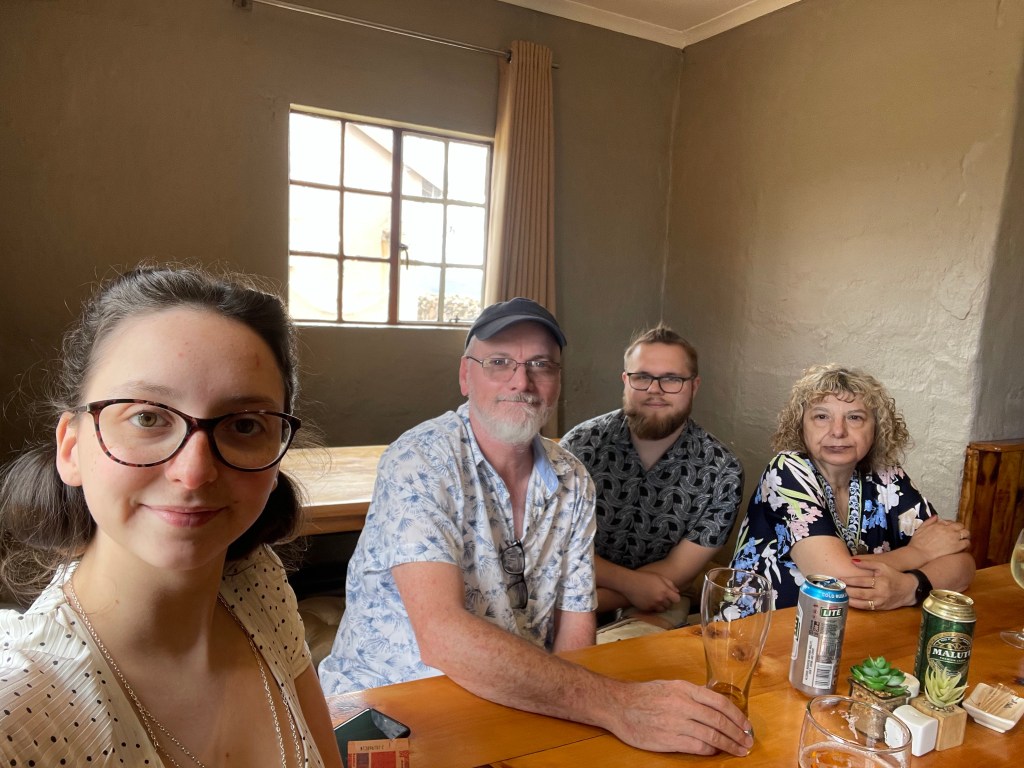
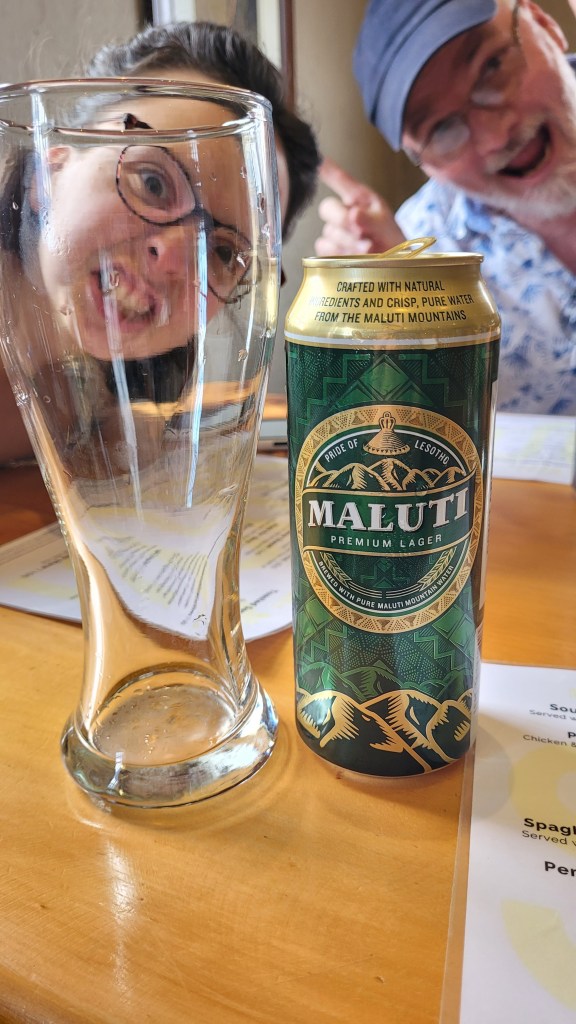
I was not feeling well enough to eat, but I manage to drink some Maluti, a beer from Lesotho, and doubtless the most “exotic” beer I have ever tried. Unfortunately, it tasted like somewhat sweet, boring lager. Still, we spent a bit of time at the pub, and admired the views of Sani Pass from above, before swiftly moving on, through Lesotho.
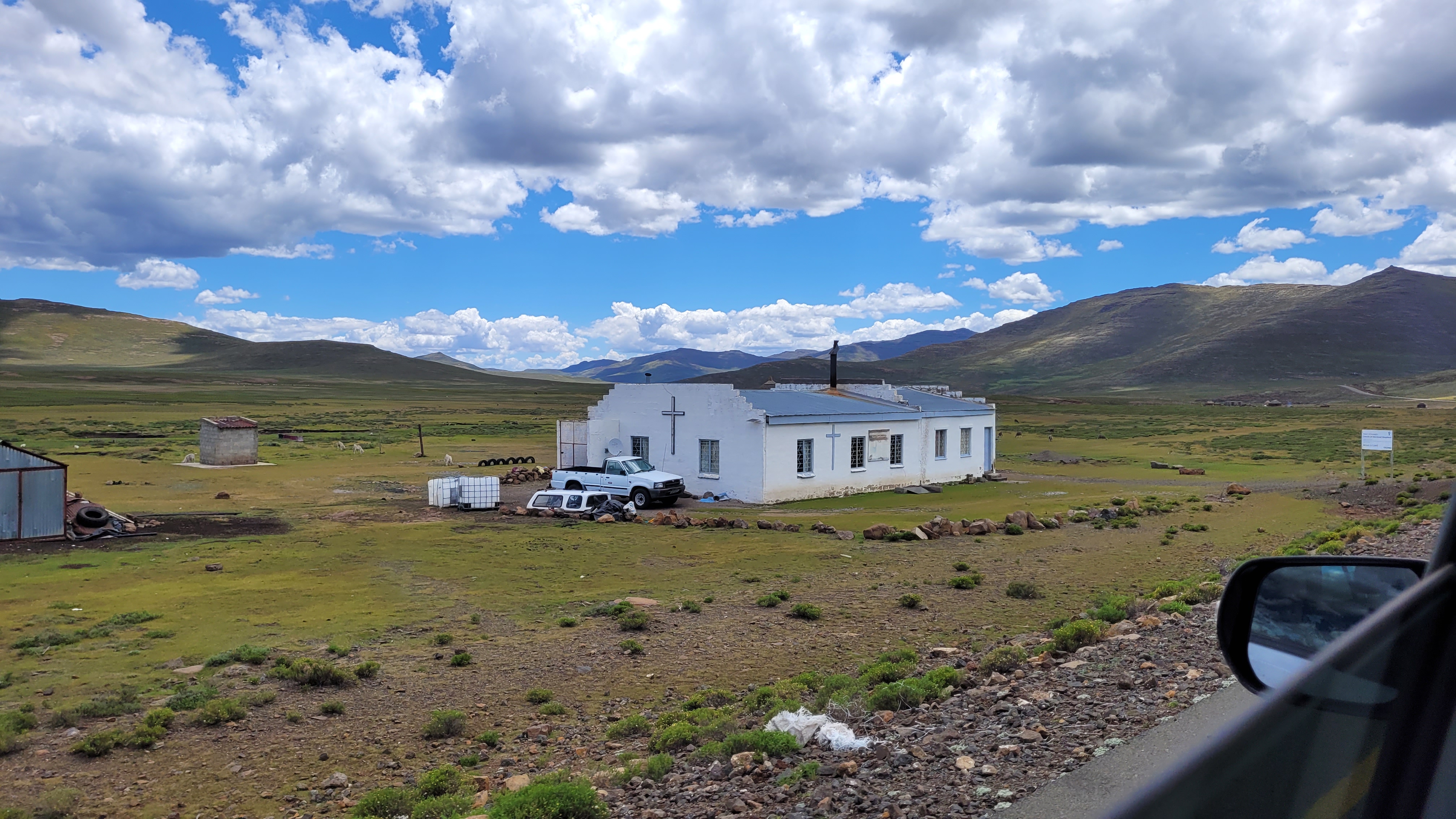
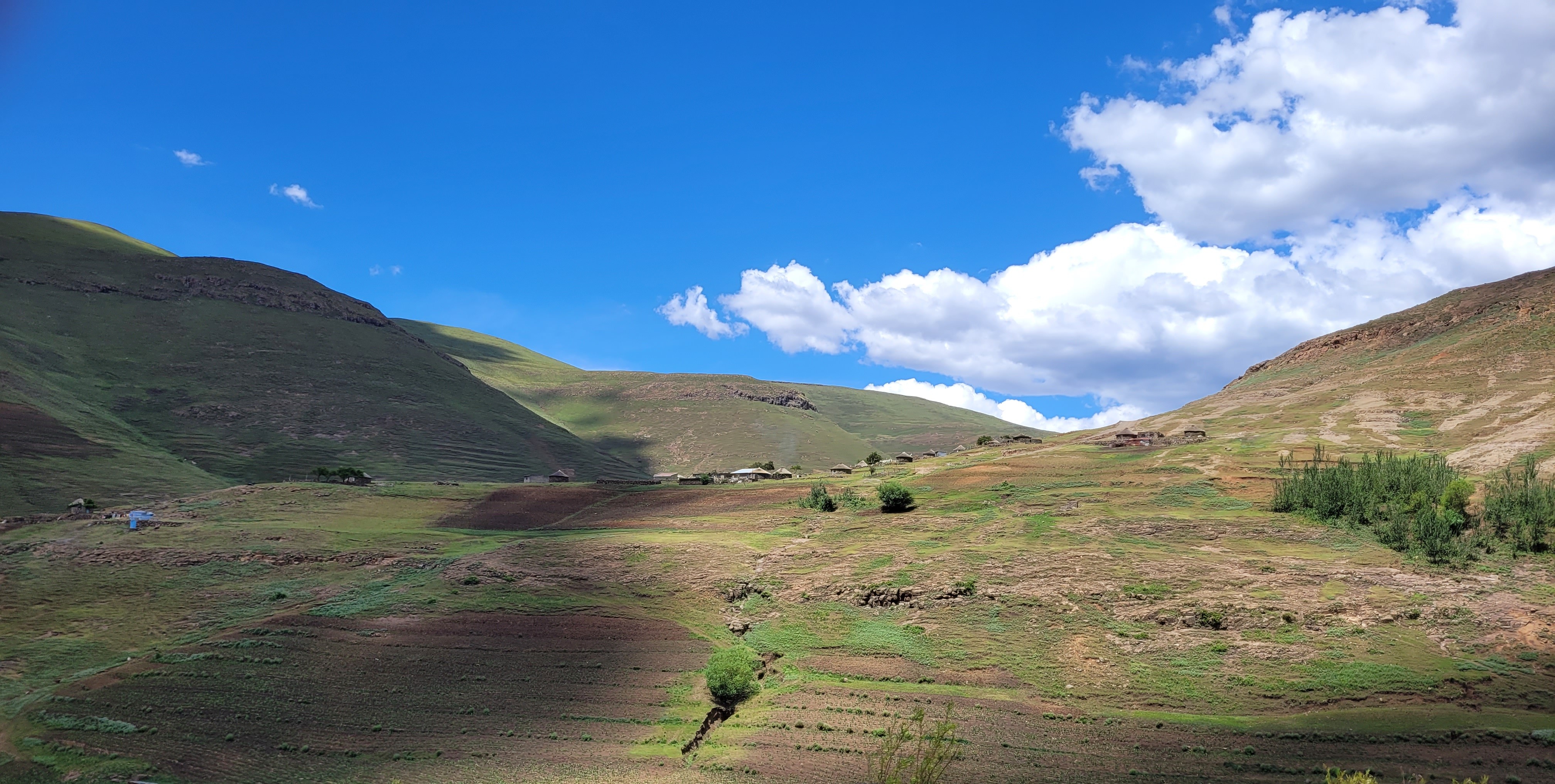
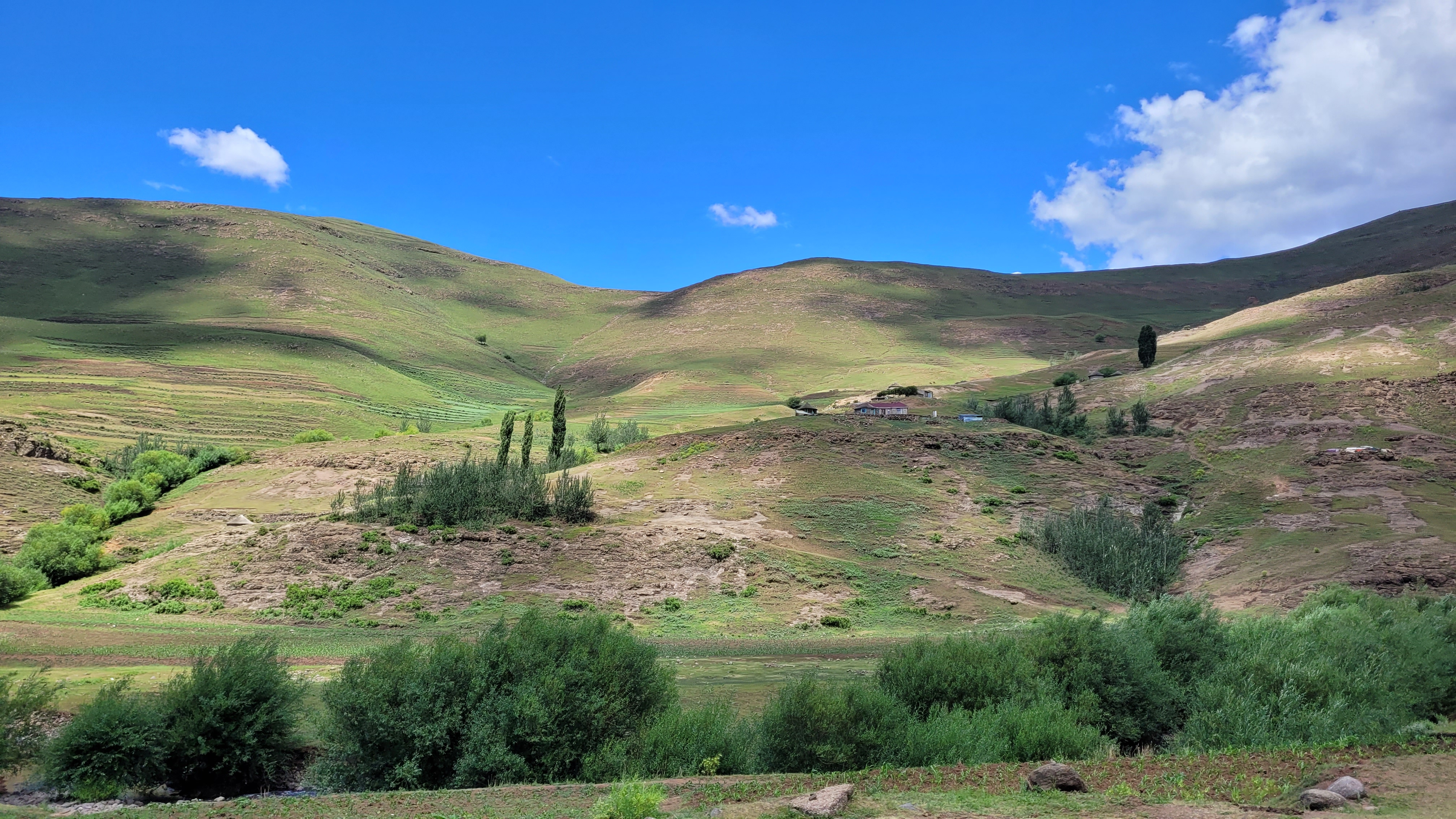
At first the landscape was bare of human influence – nothing more than the stern plateau, dotted by the occasional roundhouse. I slipped in and out of sleep in this part of the journey, greatly weakened by my sickness. At least I didn’t have to climb any of the mountains we were passing by.
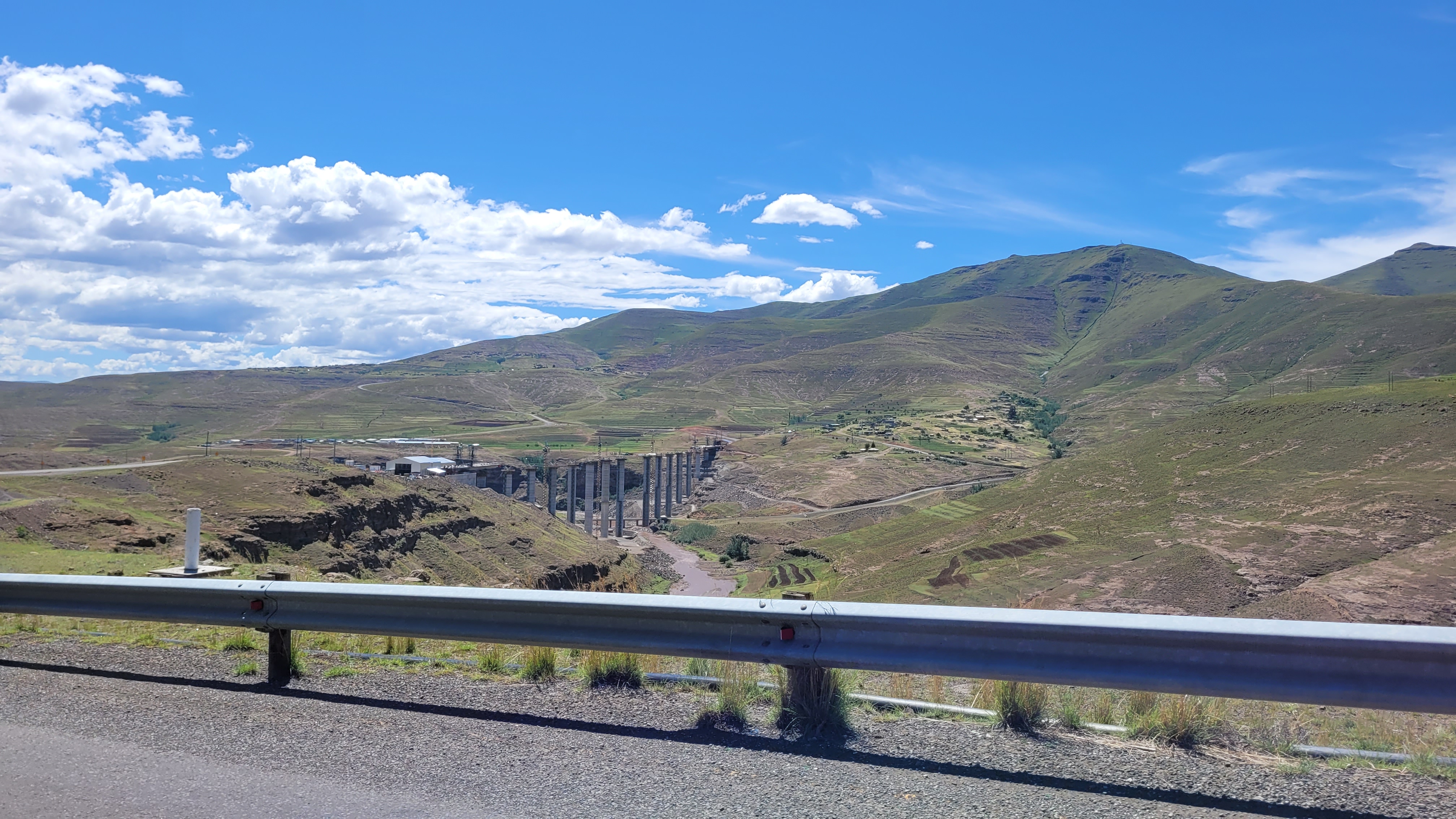
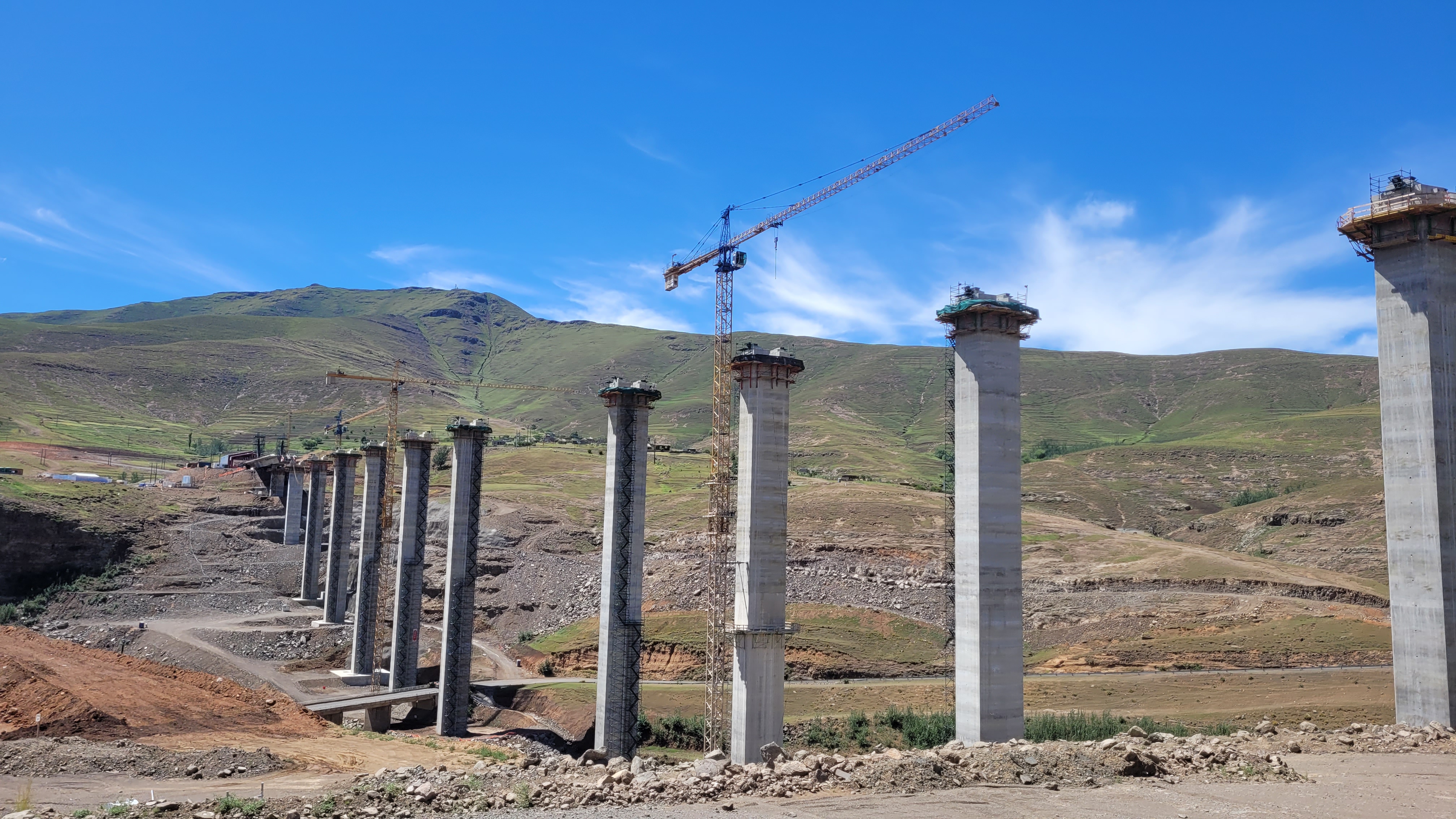
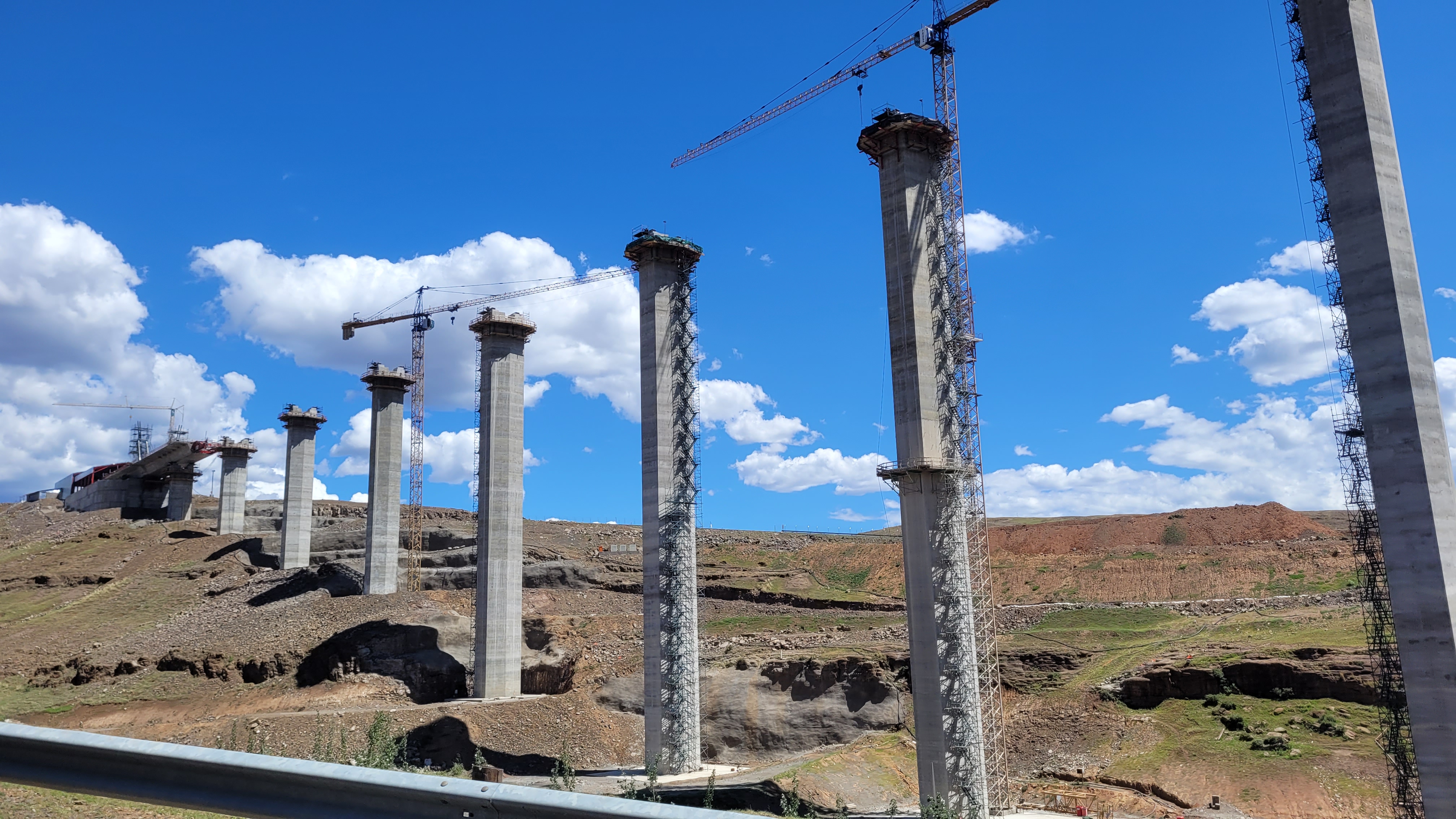
The first major landmark we drove by was the construction site of a new dam, that will eventually provide water to South Africa. We drove down between the support pillars, on a road that will no longer exist in a few years time. Bragging rights, eh?
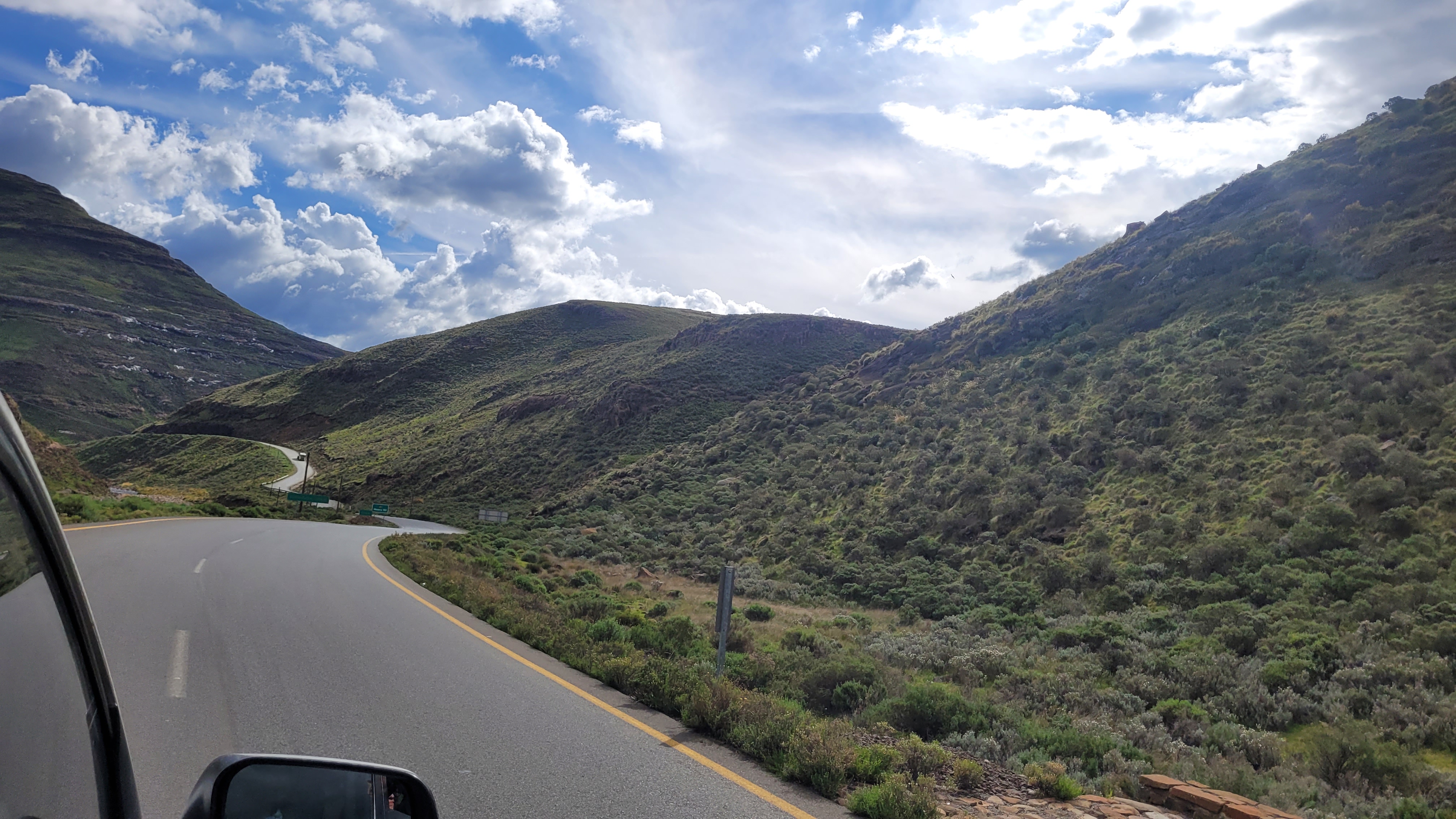
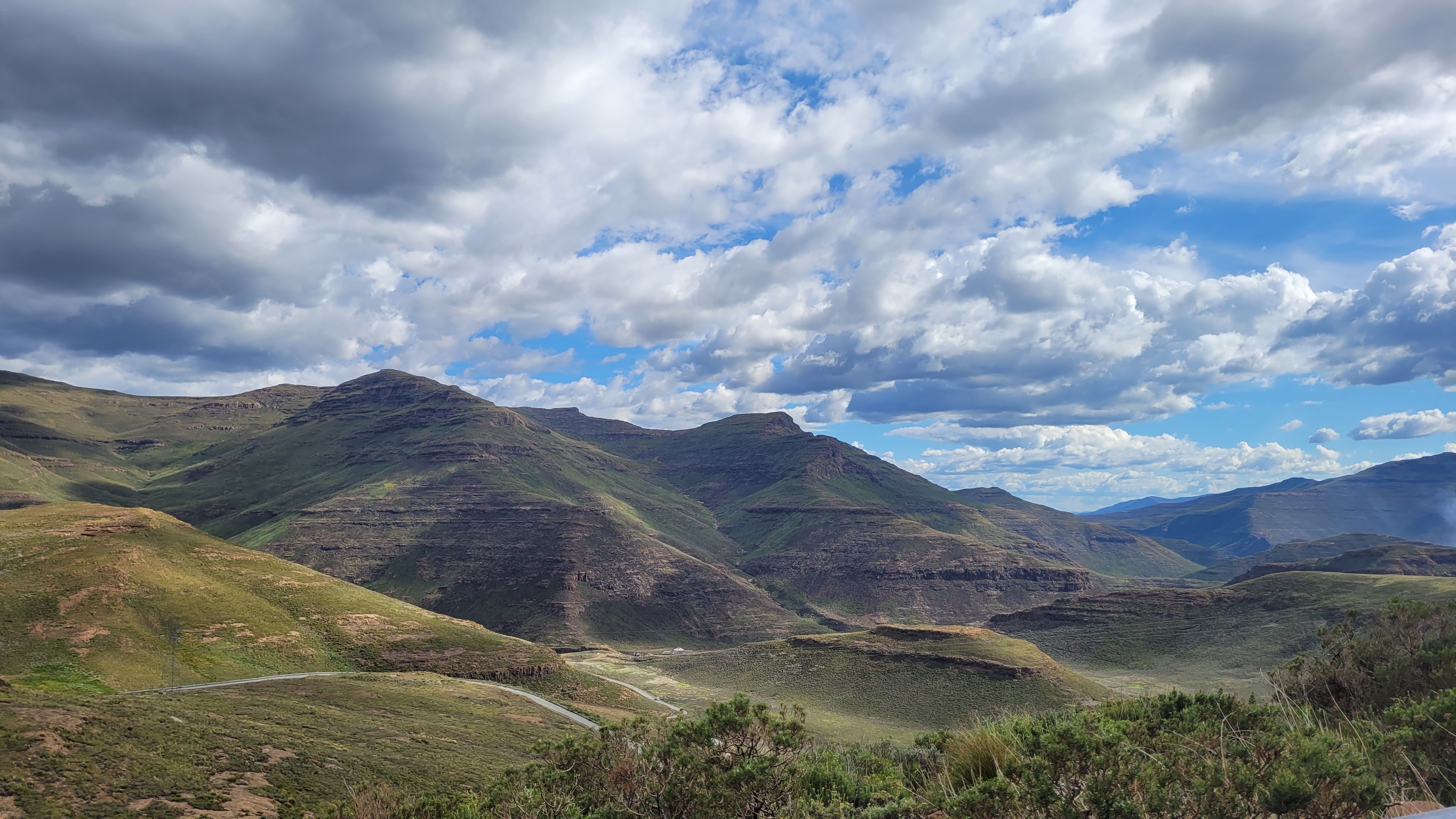
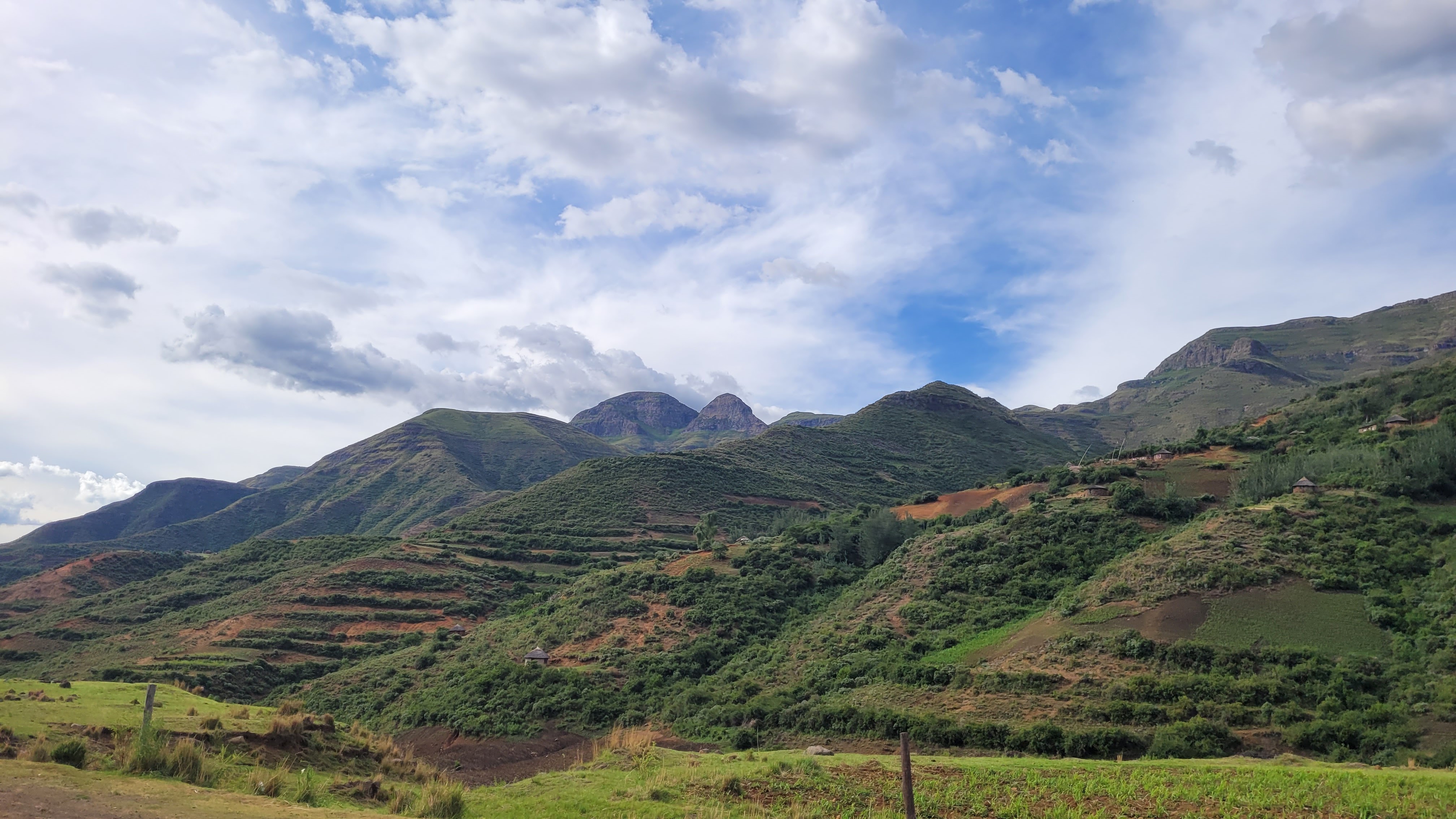
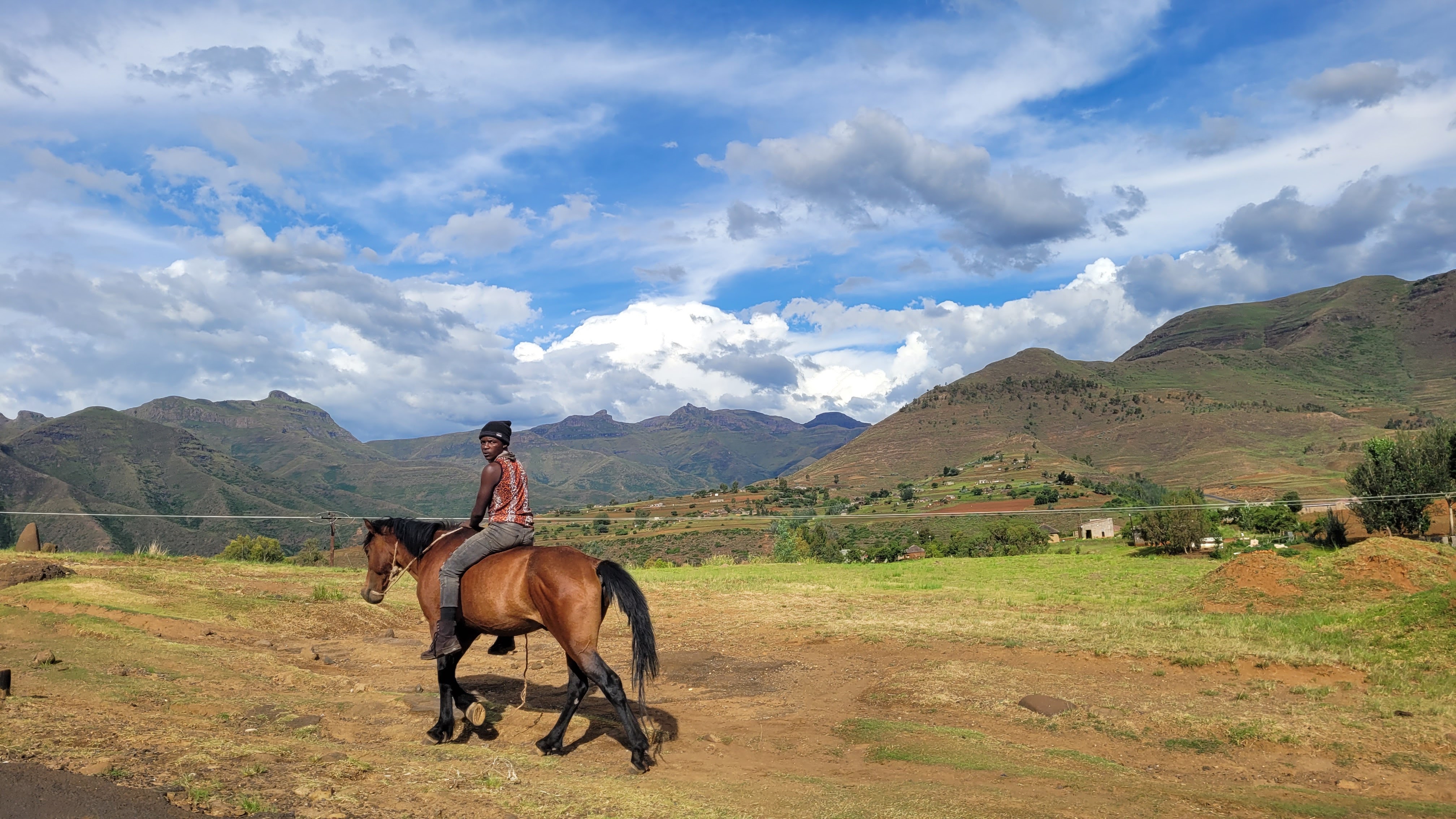
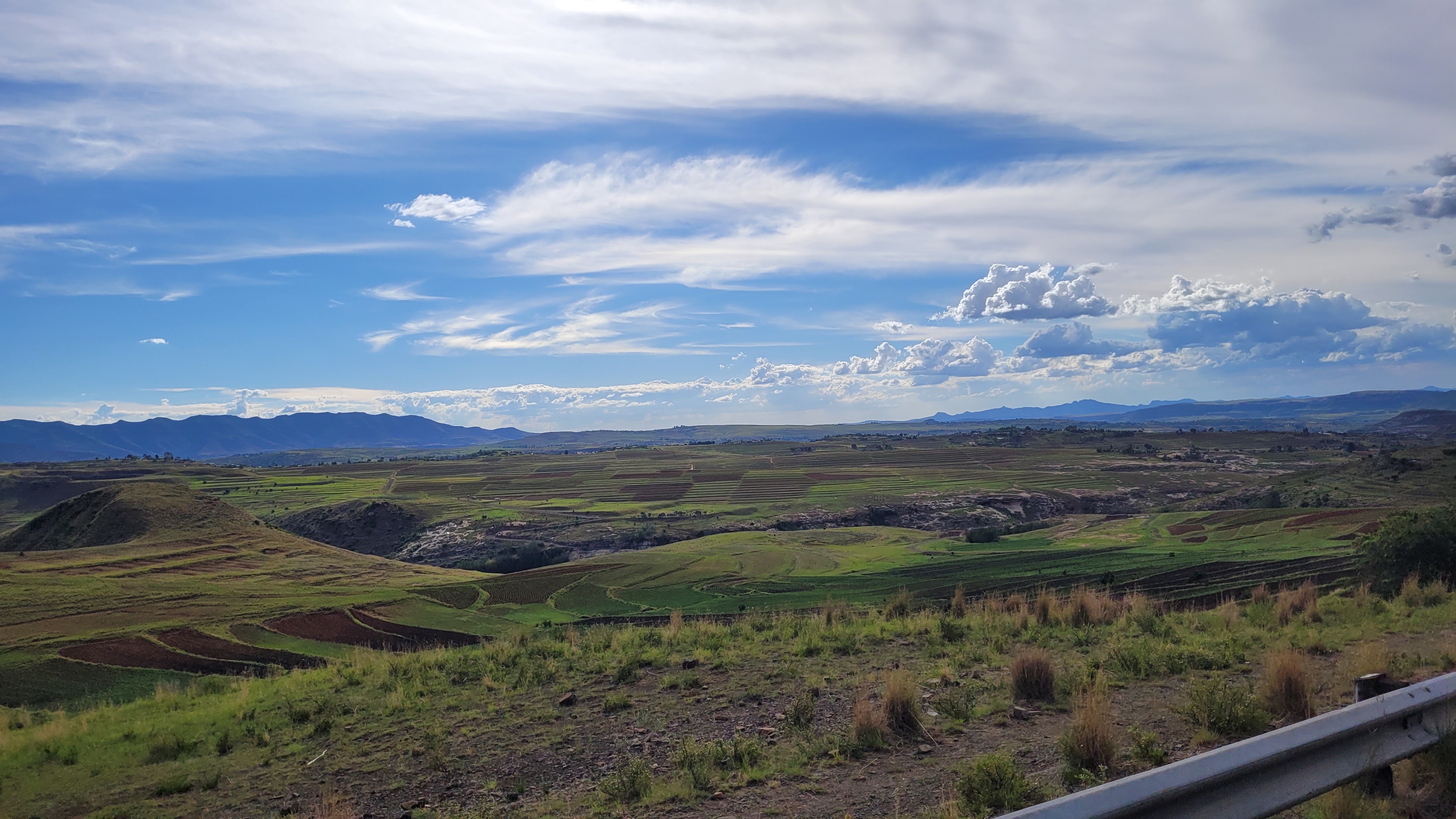
The landscape started to change. Where there was simply short grass, now proper bushes started to adorn the mountains, orange turned to dark vibrant green. The wild lands gave way to cultivated terrace farms, as we entered the Lesotho lowlands. This is where the bulk of Basotho live (Basotho is the word to refer to a group of people from Lesotho – a single individual is called a Masotho).
It was a welcome return to civilisation, as we watched Basotho go about their daily lives. These people are poor – cars are relatively rare, and generally in the hands of the rich. The farmers we passed by walked, or rode horses. Finally, we reached the South African border post, from where we were quickly on our way to Clarens, an arty town in the Free State.
The Free State
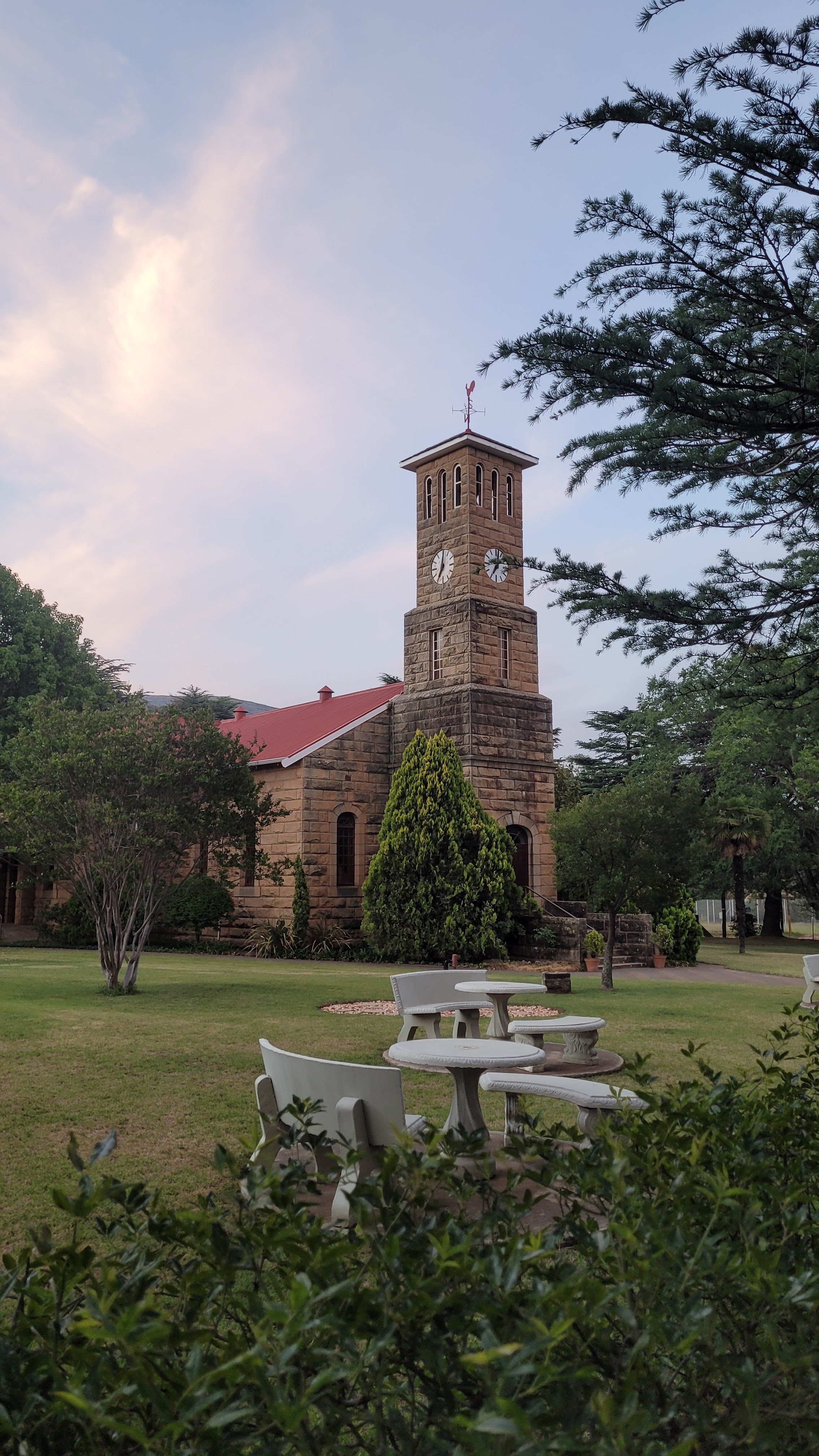
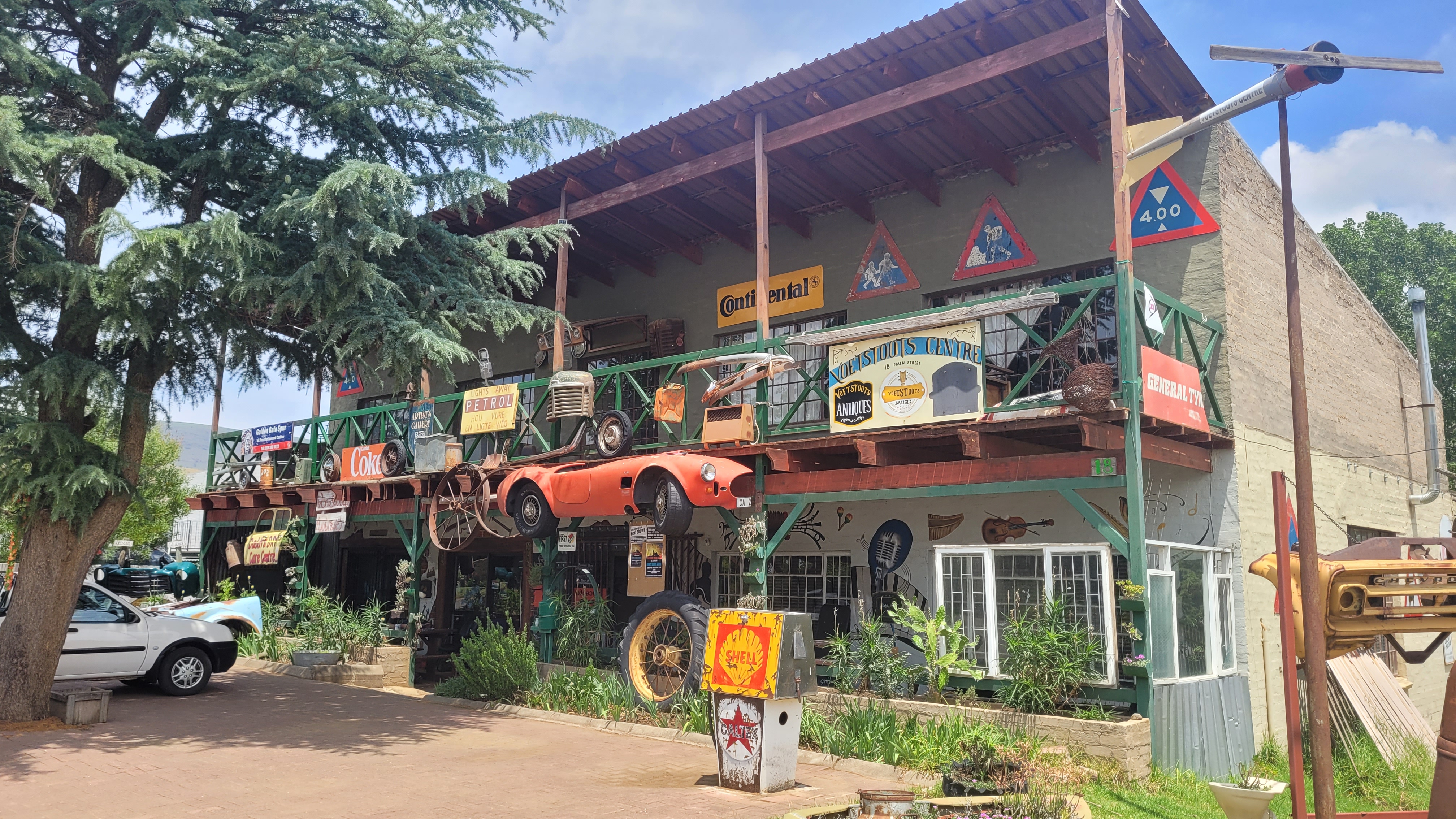
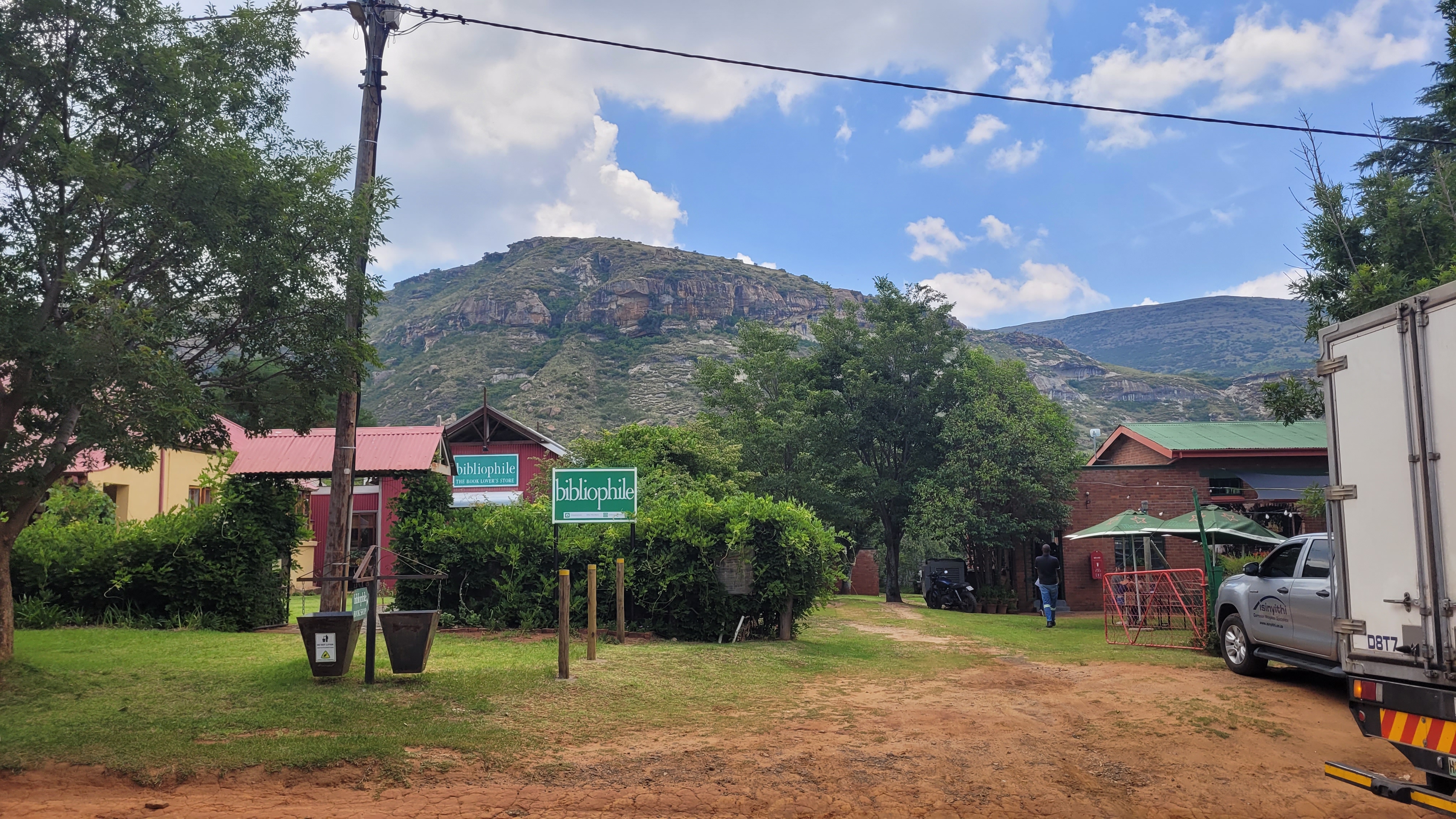
Clarens is a town significant only for it’s wide array of arty independent shops. Though it’s still littered with Chinese made “African” souvenirs, you can actually find some genuine, quality, locally-made curios. We purchased a few unique looking magnets, that far outshone the tat we found in most other South African tourist shops (not that we found many!).
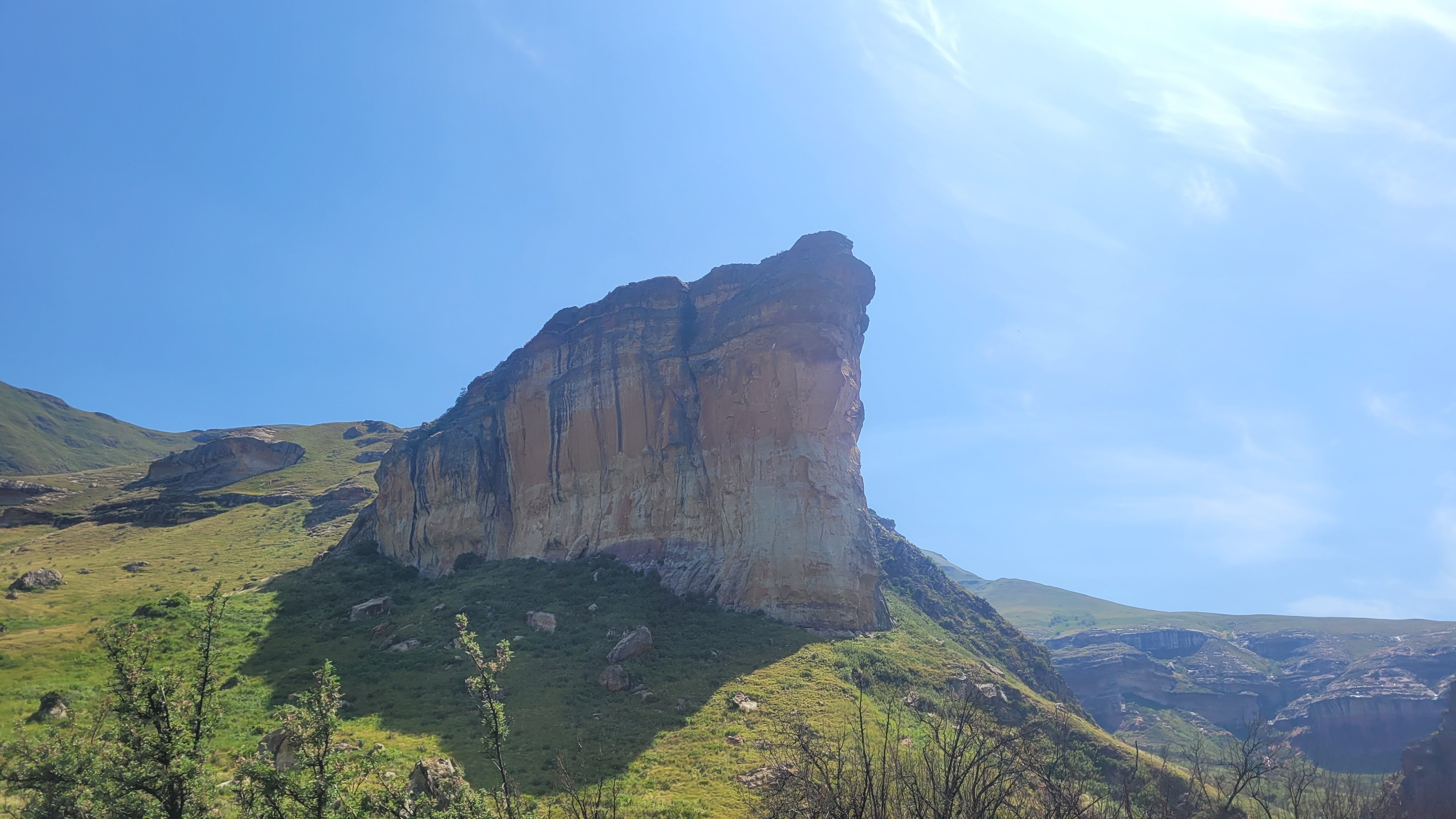
Our next step would be to drive through the Free State up to it’s border with KwaZulu-Natal. But first, we entered the Golden Gates National Park. The first stop would be breakfast, at the Golden Gates Hotel. And what a breakfast it was! The equivalent of £20 for a sad buffet of bone-dry hash browns, limp sausages, and charcoal bacon! Still, our only other option was to forage, so we had to make do with what was available.
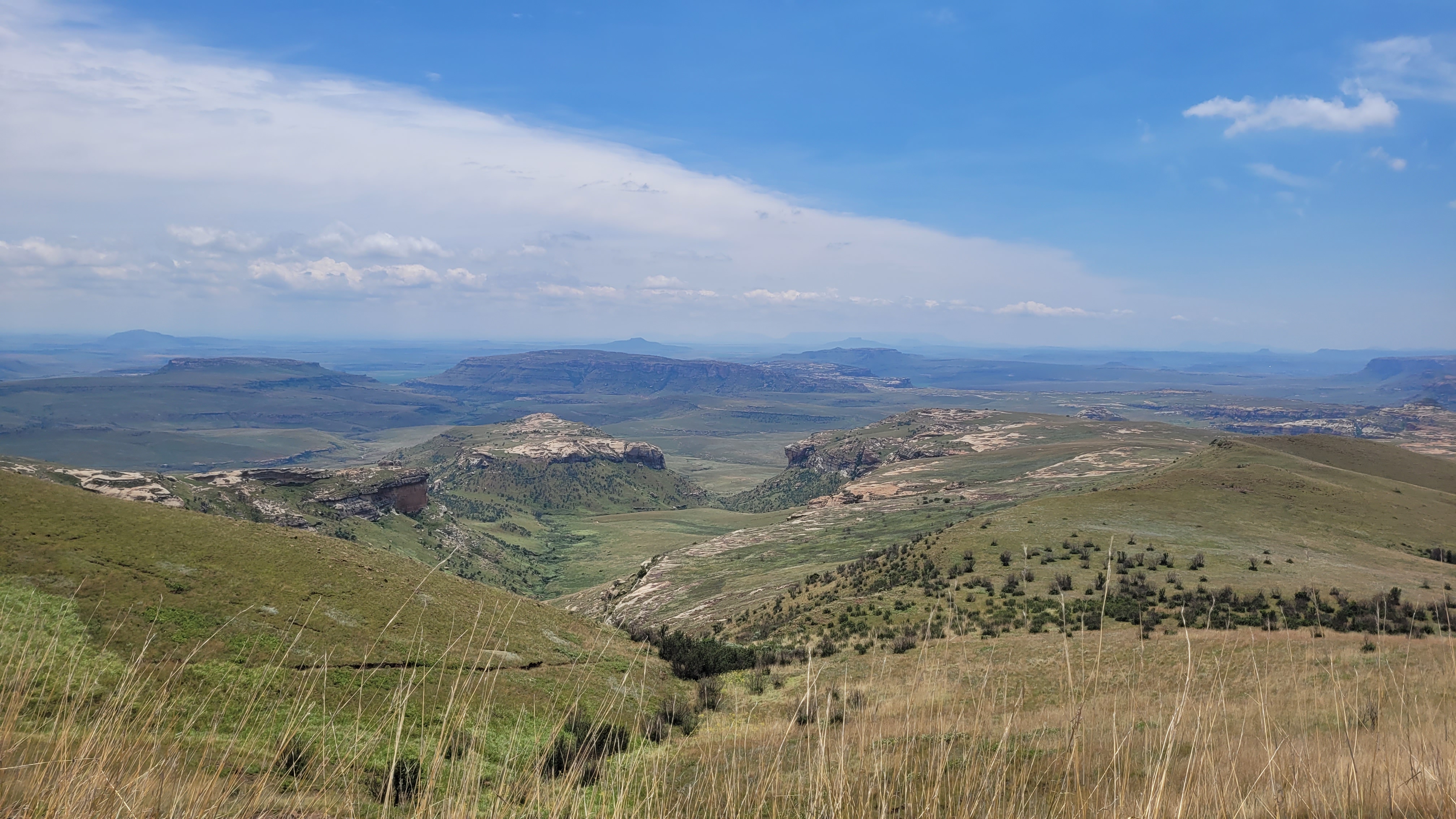
The park is relatively small, but nonetheless, very impressive. Sandstone formations rise out of gently rolling green hills. Birds of prey circle overhead, hunting for unseen critters in the grass. All the while, solitary cars transport awe-struck tourists through the winding road.
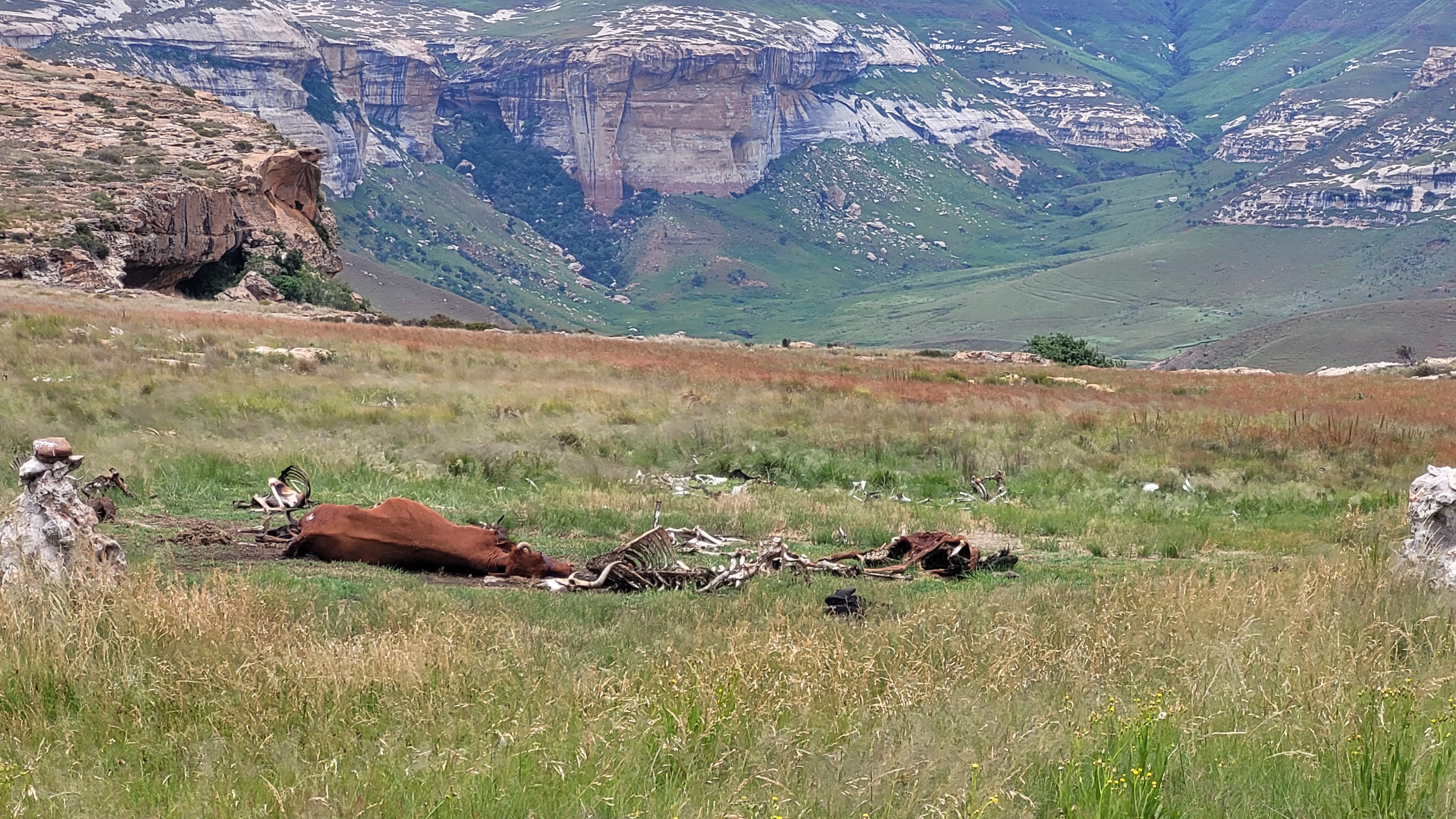
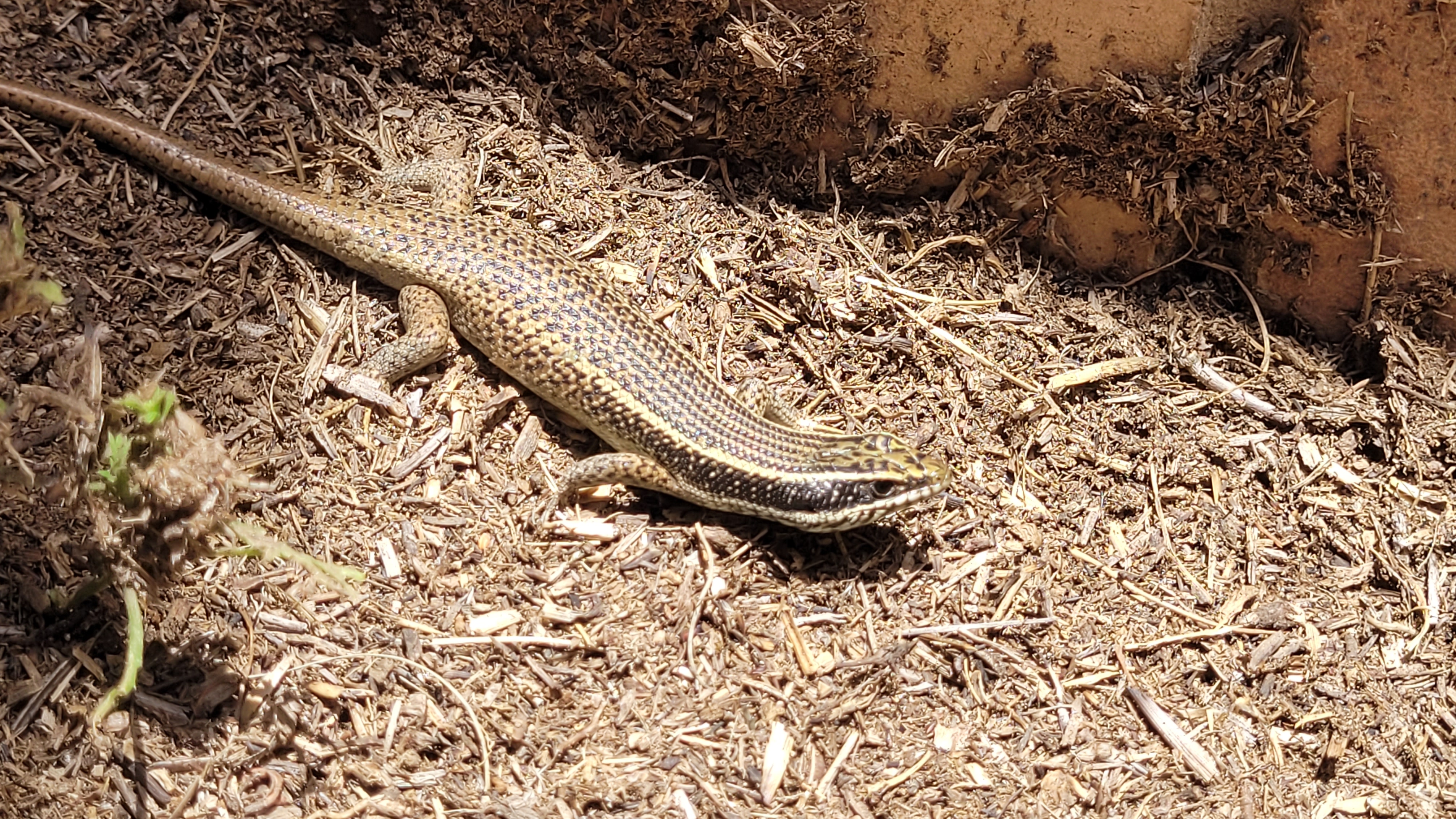
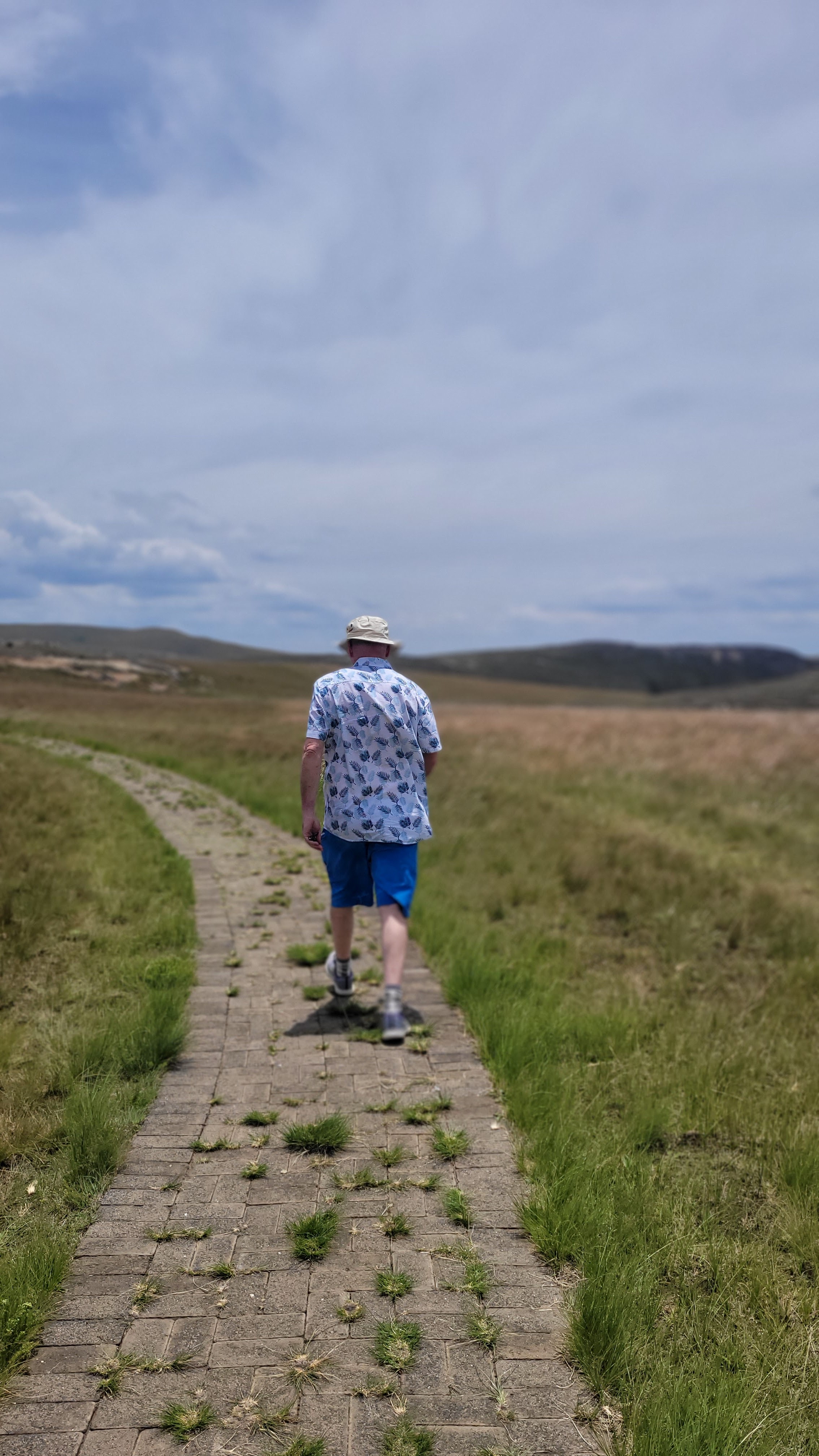
We made one stop, at the Vulture Hide. Here, a selection of carcasses have been left in front of an observation hut in a bid to attract the rare Bearded Vultures that call the park home. Alas, despite waiting for a fair long while, no such birds showed up. We did meet a little lizard though!
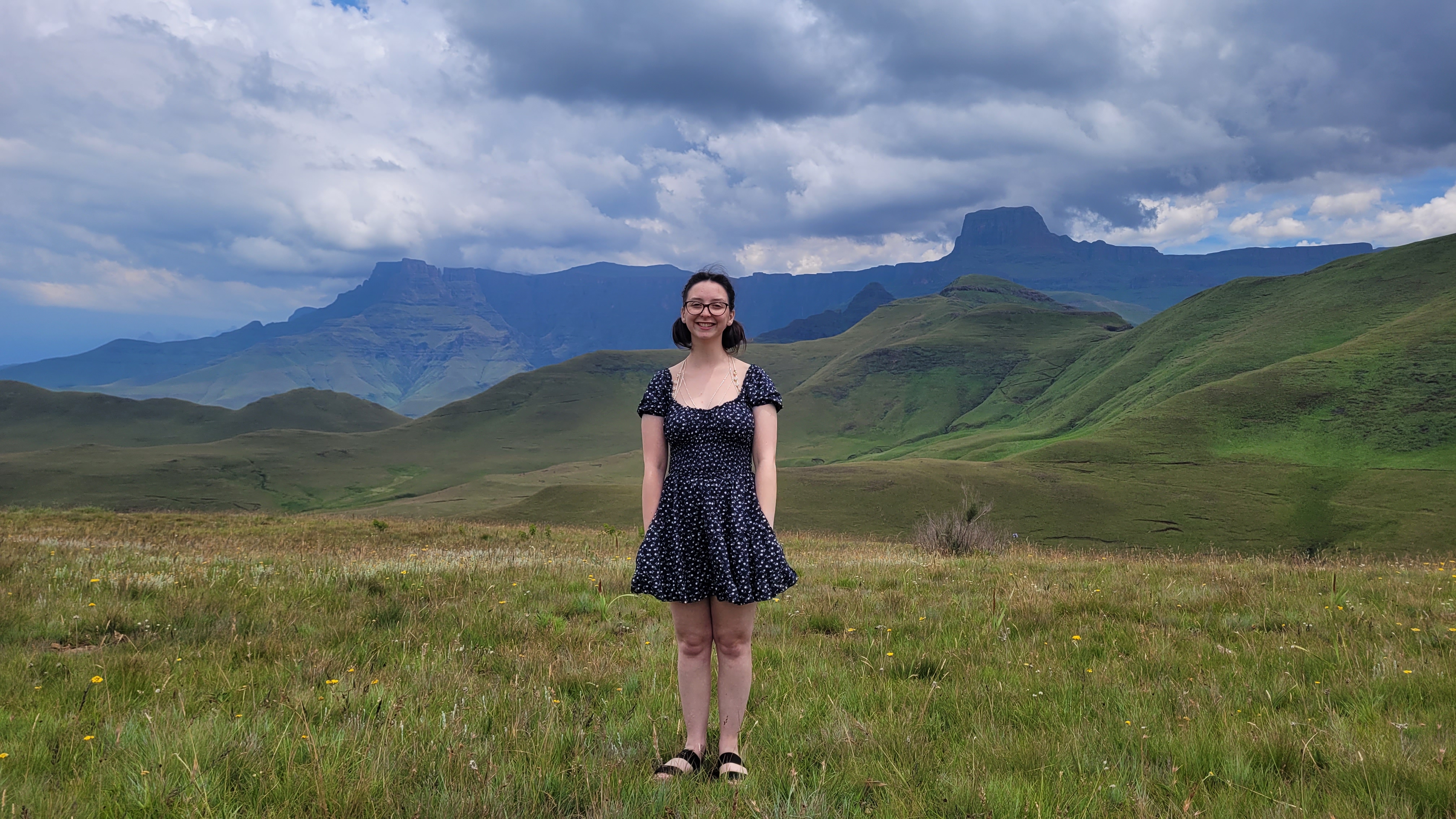
We drove a while further, along the South African side of the Drakensberg Mountains, to make it to the Sentinel Car Park, the starting point of many hikes, and a place to view the impressive, 948m tall Tugela Falls (possibly the tallest waterfall in the world). Unfortunately, as we arrived at to the road leading to it, we realised that it was completely ruined, and would present a (possibly) insurmountable challenge for David’s 4×4. Instead, we decided to drive up to Witsiehoek Mountain Lodge, where we got some lovely views of the Mountains.
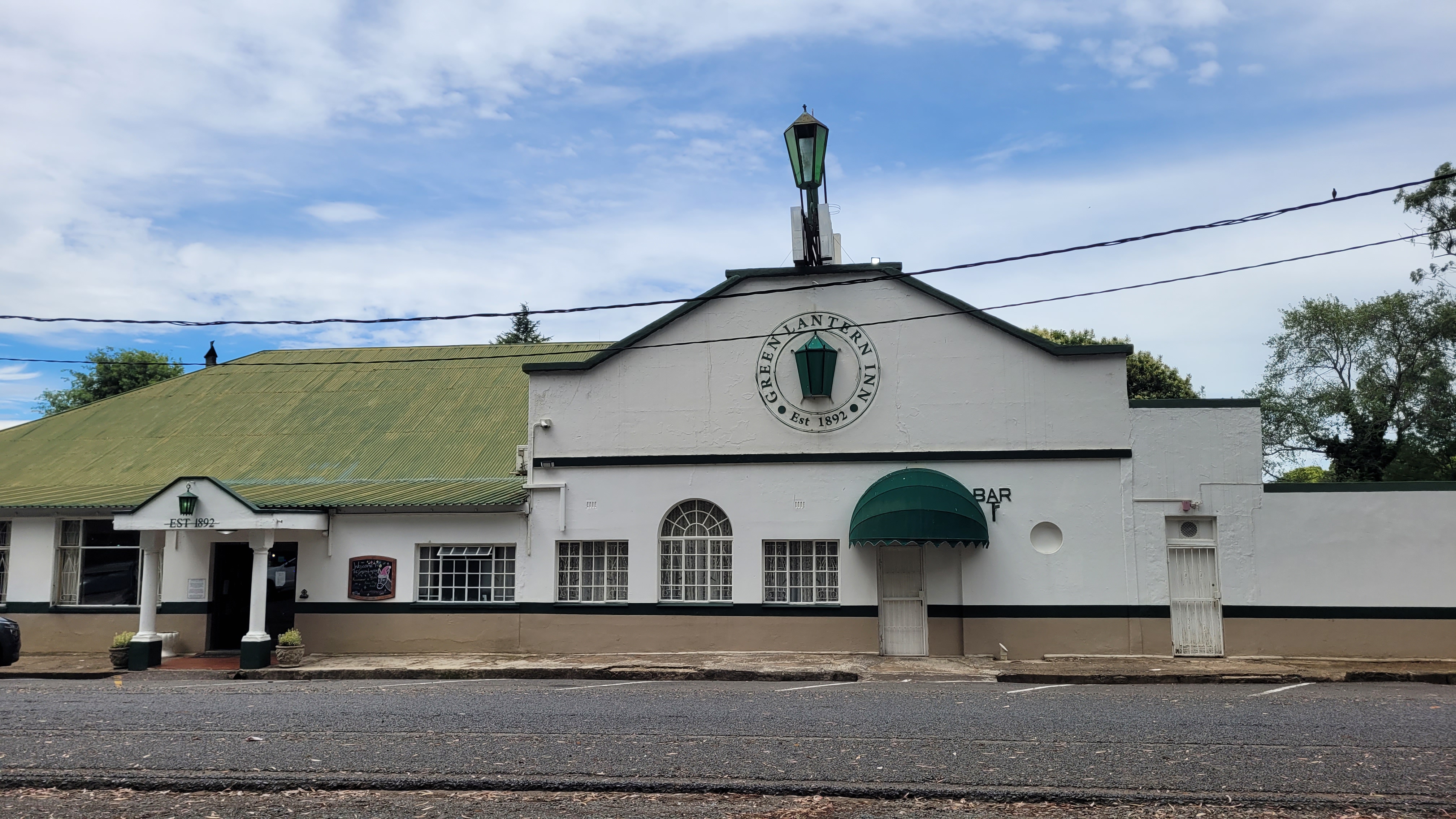
Our last stop of the trip was the town of Van Reenen, the border town between Free State and KwaZulu-Natal. We had actually driven past it on the way to Shelly Beach already, and now we were returning.
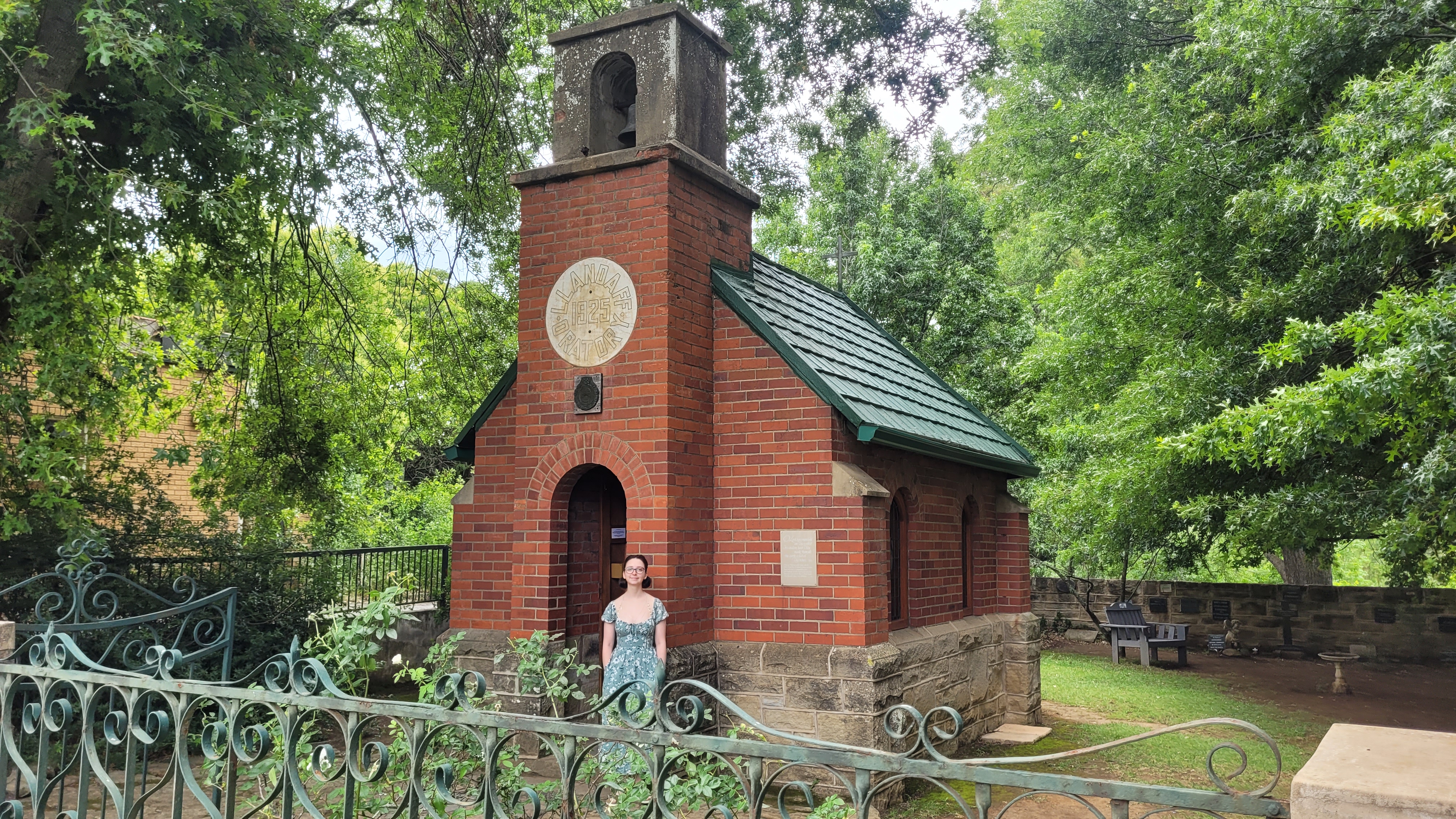
We stayed at the Green Lantern, a historical coaching inn, dating back to the very early 20th century. Van Reenen was more of a rest stop for us, and the only thing we saw of any significance was its Little Church, probably the smallest church we’ve ever been in.
Our trip was coming to an end, as we drove Northwards up the N3, back home to Pretoria. It was an amazing trip, fitting in more different landscapes than I had seen in my whole life. We saw natural beauty like we had never seen before, and even had a pint at the Highest Pub in Africa. It was a fantastic journey, and we were all sad it was coming to an end.
 We May Roam